SenseCAP Solar Node P1-Pro Review: Our Go-To Solar Repeater
SenseCAP Solar Node P1-Pro review: months on the roofline, a 19km link, and a battery that just works. One nitpick: RP-SMA.
The SenseCAP Solar Node P1-Pro is the solar repeater we stopped tinkering with and just let run. A 5W integrated panel, four 18650 cells for 13,400 mAh of onboard buffer, a built-in GPS module, and Seeed’s Wio-SX1262 LoRa radio, all in a sealed IP-rated enclosure with mounting hardware in the box. It ships pre-flashed with Meshtastic and reflashes cleanly to MeshCore. Current price is $100.99.
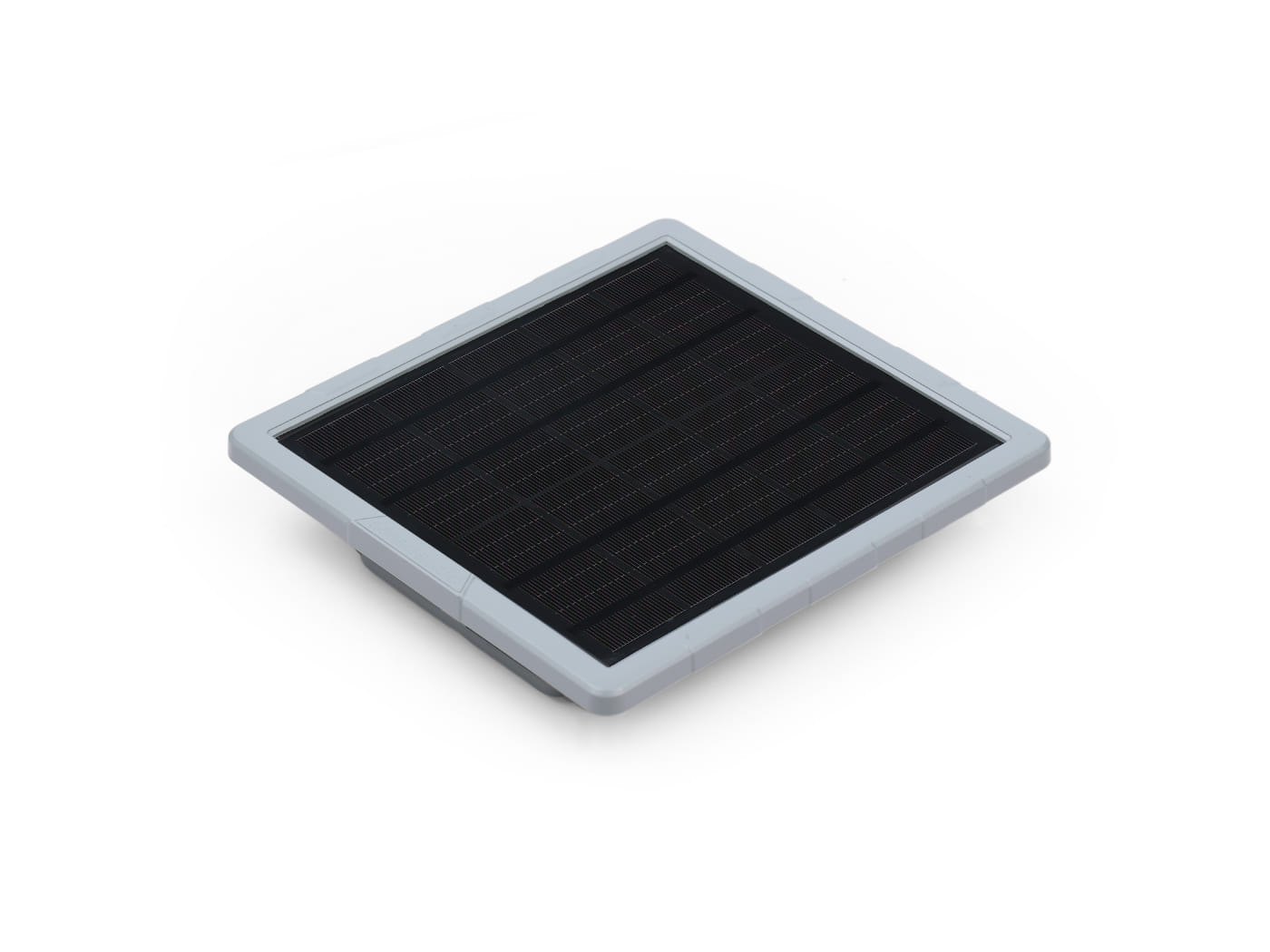
This is the same SenseCAP lineup as the T1000-E we carry daily, just built for a fixed installation instead of a pocket. We first flagged the P1-Pro when Seeed added us to their affiliate program. This is the actual field report after living with one.
We’ve had one mounted on a roofline for a few months now, running stock Meshtastic firmware the whole time. This isn’t a spec sheet writeup. We’ve watched it through cloudy stretches, checked in on the battery voltage more out of curiosity than concern, and mostly just forgotten it’s up there, which for a solar repeater is the highest compliment we can give.
What’s Inside
Pop the lid and you get a clean look at what’s actually running the show: a XIAO nRF52840 Plus module (the same Nordic nRF52840 core you’ll find in half the mesh hardware worth owning) paired with a Wio-SX1262 LoRa module rated at 22 dBm, and a XIAO L76K GPS module supporting GPS, GLONASS, and Galileo.
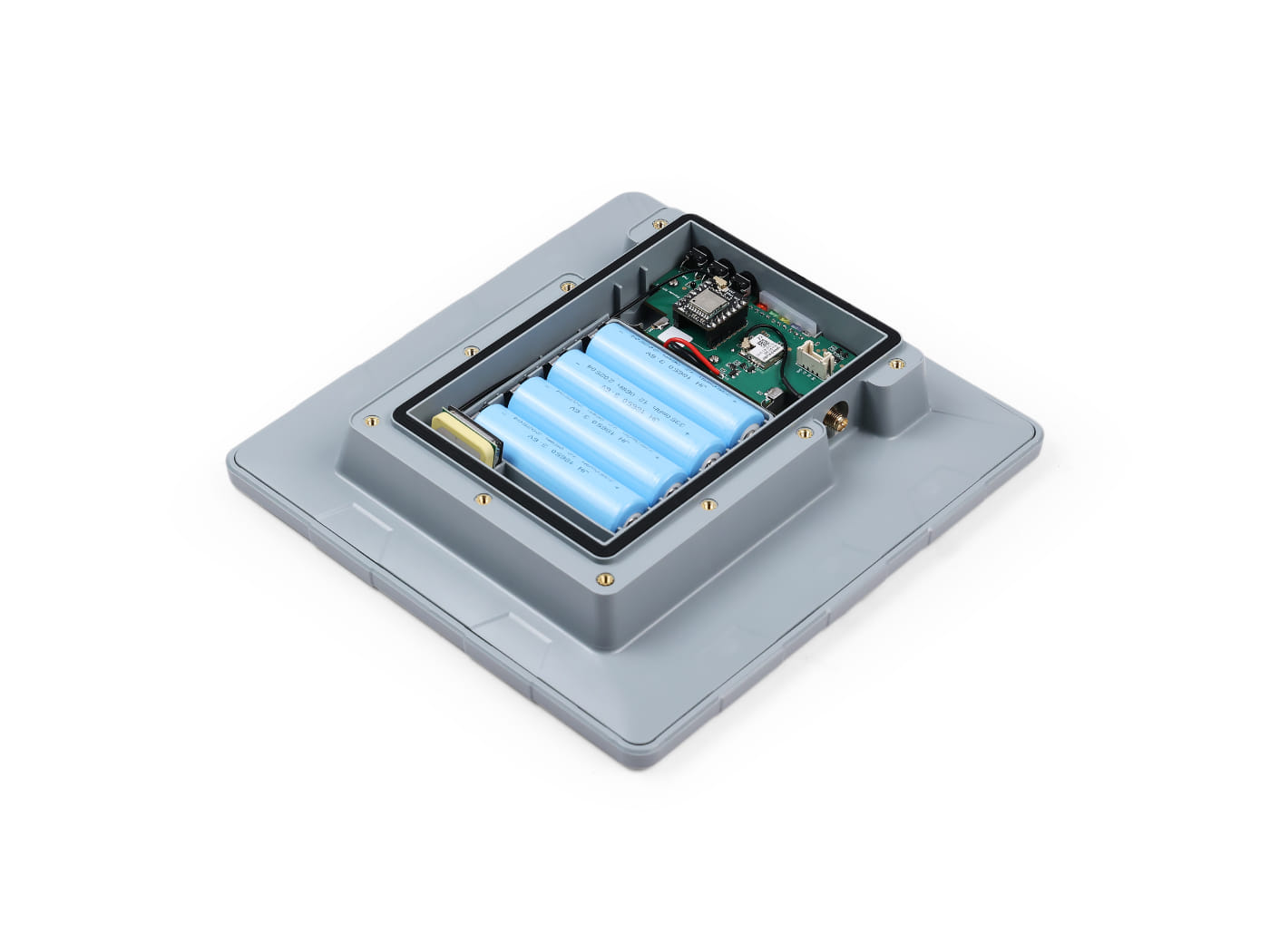
The battery bank is the headline. Four 18650 cells at 3350 mAh each work out to roughly 13.4 Ah of buffer, which is a lot of runway for a node that’s also pulling in 5W of solar every clear day. In practice, that combination means the node barely notices a run of overcast days. We haven’t had to think about it since we mounted it.
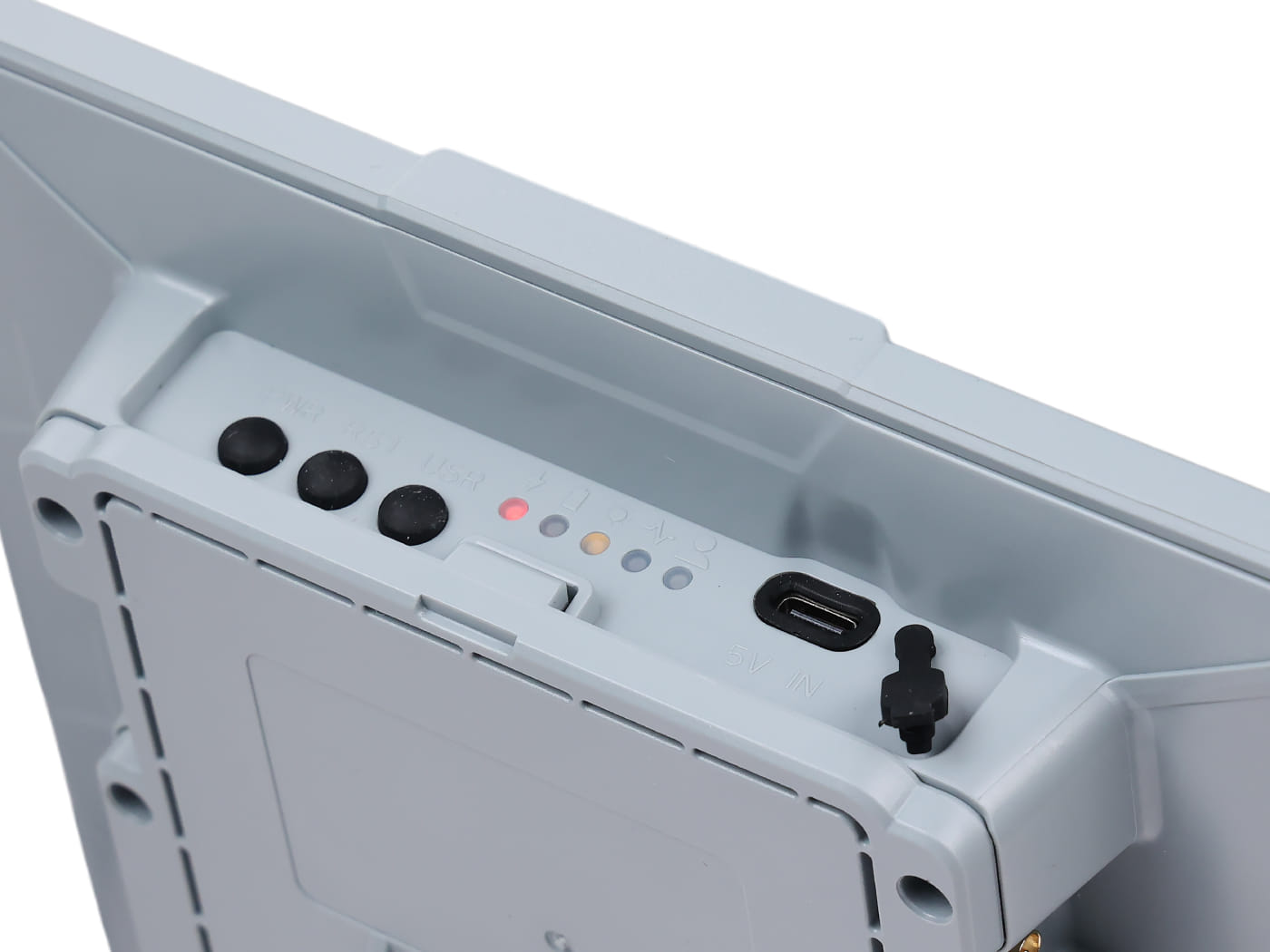
The button and LED panel is a nice touch for a device that’s otherwise meant to be sealed and forgotten. Power, reset, and a user-defined button sit next to a small LED cluster: charging status, solar status, and a dedicated mesh heartbeat light, so a glance at the enclosure tells you whether it’s alive without pulling up the app.
There’s also a single Grove connector (I2C/GPIO/UART) inside, which opens the door to temperature, humidity, or other sensors if you want this node doing double duty as an environmental station instead of just a repeater. We haven’t wired anything into it yet, but the option being there at all is the kind of detail that makes a $100 node feel like a platform instead of an appliance.
Mounting and What’s in the Box
Seeed doesn’t make you improvise a mount. The box includes stainless steel brackets, a hose clamp for pole mounting, the whip antenna, an antenna pigtail, screws, and a USB-C cable.
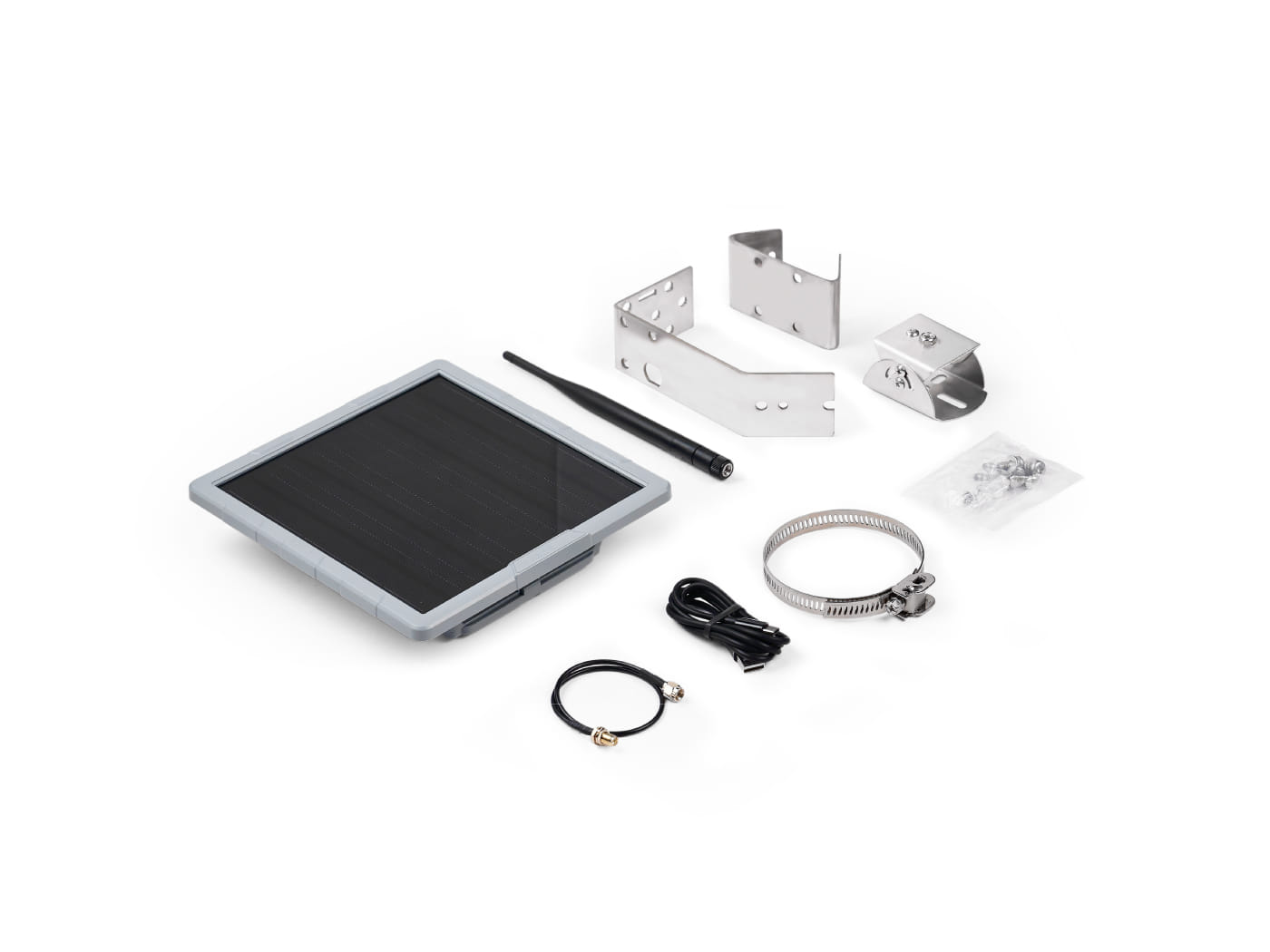
Install took a few minutes: clamp the bracket to the pole, seat the enclosure, screw on the antenna, done. No drilling, no separate enclosure to source, no charge controller to wire in yourself. For a solar node in this price range, that turnkey install is worth calling out.
We’ve dealt with boards like the GAT562 30s that hand you bare solar pads and expect you to bring your own battery management. This isn’t that. Everything ships matched and tested together.
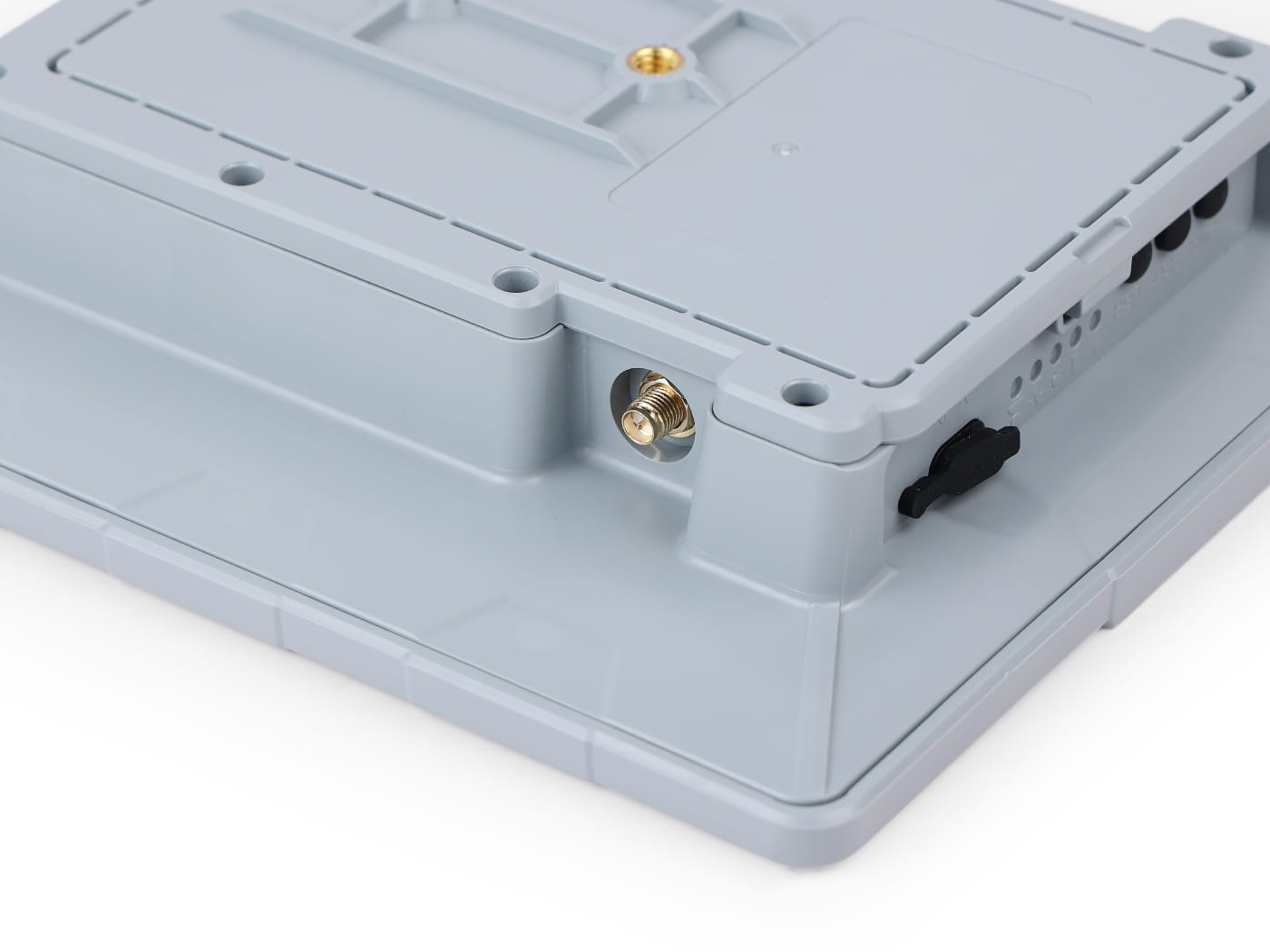
The one nitpick, and it’s a personal one more than a universal flaw: the antenna connector is RP-SMA, not standard SMA. Our own antenna and cable stock elsewhere on the network runs standard SMA, so this meant digging out an adapter rather than swapping a cable straight across. Seeed clearly knows this comes up, because they sell the exact adapter cable (RP-SMA male to N-type SMA female) as an add-on for $4.99. If your gear closet already leans RP-SMA, this is a non-issue. If it doesn’t, budget five dollars and thirty seconds for the adapter.
In the Field
Ours is mounted on our roofline, and battery life has lived up to Seeed’s claims the whole time. Between the 5W panel and the 13.4 Ah of 18650 buffer, we haven’t had to think about it once, cloudy stretches included.
GPS lock has been quick every time we’ve checked it, which tracks with mounting it somewhere with a clear sky view in the first place. The built-in positioning means the node reports its own coordinates onto the mesh, useful for confirming placement or documenting a repeater grid without pulling out a phone.
Range is where this thing has actually surprised us. Seeed publishes 8 to 9 km device-to-device in open line-of-sight conditions. From the roofline, we’ve held a clean link out to 12 miles (19.3 km), well past Seeed’s own spec sheet. We’re not claiming that as a universal number (site elevation and clean line of sight are doing a lot of the work), but it’s a real result on our grid, not a lab figure.
It ships pre-flashed with Meshtastic, and we’ve left it on Meshtastic since deploying. Seeed’s documentation confirms it also reflashes to MeshCore if you’d rather run it there, which matters to us since we operate both protocols across the network. A solar node that only committed to one firmware would have been a harder sell.
What We’d Love to See Next
The one thing we’d change isn’t a flaw in what shipped, it’s a request for what’s next: a 1W version of this same platform. Our roofline site is already producing a bidirectional 50-plus mile link on a separate 1W radio, so we know the location can support that kind of distance. A 1W P1-Pro with the same integrated panel, the same battery bank, and the same turnkey mounting hardware would let us point that exact setup at our best site and see what it can really do. If Seeed ships one, we’ve got the perfect spot waiting for it.
Full Specs
| Spec | Detail |
|---|---|
| MCU | XIAO nRF52840 Plus (Nordic nRF52840, Cortex-M4, 64 MHz, 256KB RAM, 1MB flash + 2MB onboard flash) |
| LoRa Module | Wio-SX1262 (Semtech SX1262, 22 dBm TX, 862-930 MHz) |
| GPS Module | XIAO L76K (GPS, GLONASS, Galileo) |
| Bluetooth | v5.0 |
| LoRa Antenna | External rubber rod, 868-915 MHz, 2 dBi gain, RP-SMA connector |
| Solar Panel | 5W, integrated |
| Battery | 4x 18650 lithium, 3350 mAh each (~13.4 Ah total), button-top cells |
| Power Input | USB-C 5V/1A; solar 5V/1A |
| Interface | 1x Grove (I2C/GPIO/UART), USB-C debugging |
| Buttons | Power, reset, user-defined |
| LEDs | 2x charging status, 1x solar status, 1x mesh heartbeat, 1x user-defined |
| Discharge Temp | -40 to 60°C |
| Charge Temp | 0 to 50°C |
| Dimensions | 191.2 x 201.2 x 42.1 mm |
| Certification | FCC, CE |
| Firmware | Ships pre-flashed Meshtastic; reflashes to MeshCore |
| Communication Distance | 8 to 9 km per Seeed; we’ve held 19.3 km (12 mi) roofline to roofline |
| Price | $100.99 |
How It Compares to the Base Solar Node P1
The natural comparison is Seeed’s own Solar Node P1, the non-Pro version of the same enclosure. Same MCU, same LoRa module, same 5W panel. The difference is entirely in what’s populated inside.
| Solar Node P1-Pro | Solar Node P1 | |
|---|---|---|
| MCU | XIAO nRF52840 Plus | XIAO nRF52840 Plus |
| LoRa Module | Wio-SX1262, 22 dBm | Wio-SX1262, 22 dBm |
| GPS | XIAO L76K, built-in | Not included |
| Battery | 4x 18650 (3350 mAh each), included | Not included, bring your own |
| Solar Panel | 5W | 5W |
| Price | $100.99 | $77.99 |
The $23 gap buys you two things: GPS positioning and a full battery bank you don’t have to source yourself. If you’ve already got 18650s on hand and don’t care about onboard GPS, the base P1 saves real money for the same radio and solar performance. If you want to unbox it, mount it, and never think about the battery again, the Pro is worth the premium. That’s exactly the calculation we made, and a few months in, we’d make it again.
Who This Node Is For
If you’re expanding repeater coverage and want a solar node that doesn’t ask you to become a power-electronics hobbyist first, this is the one we’d point you to. The battery bank, the integrated panel, and the mounting hardware all showing up matched and tested is rare enough in this space that it’s worth paying for.
If you’re running a mixed Meshtastic and MeshCore network like we are, the fact that this reflashes cleanly between the two matters more than it might look like on a spec sheet. A lot of solar hardware commits to one firmware and leaves you stuck if your network’s priorities shift.
If your antenna stock is already standard SMA across the board, keep the $5 adapter cable in mind when you order. It’s a minor logistics step, not a reason to skip the node.
If you don’t need GPS and already have 18650 cells sitting in a drawer, the base Solar Node P1 with code CU0W371Y gets you the same radio and panel for less.
Months in, this is still the solar repeater we recommend first. We’ll keep updating this post if anything changes after a full season of weather.
You can find the SenseCAP Solar Node P1-Pro on Seeed Studio with code CU0W371Y.
Comments
Related Posts
Wio Tracker L1 Pro Long-Term Review: Still Our Favorite Node
The Wio Tracker L1 Pro has survived a 12-foot concrete drop, a security convention in Minneapolis, and months of outdoor use. Still our top pick.
Seeed Wio Tracker L1 Pro Review: The Goldilocks Mesh Node
Seeed Wio Tracker L1 Pro review. NodakMesh's daily-carry favorite. SX1262, OLED, external antenna, USB-C. Why it's our Goldilocks node.
Seeed MeshCore Starter Kit: Solar Repeater + Client Bundle
Seeed's MeshCore Starter Kit bundles a solar repeater and Wio Tracker L1 Pro into one off-grid mesh. Antenna picks, setup tips, and who it's for.