SenseCAP MeshTracker X1 Review: Our New Daily Carry
A month of daily carry with the SenseCAP MeshTracker X1: 4.5 to 5 days per charge, the best reception of the three trackers we carry, and USB-C at last.
We closed our first look at the SenseCAP MeshTracker X1 with a promise: a full review once we had one in hand and some real time on it. A month of daily carry later, here it is. Short version, this is the best pocket tracker we’ve carried. It hears more than the T1000-E or the RAK WisMesh Tag on the same routes, it runs 4.5 to 5 days per charge, and it’s been on a belt loop or in a backpack pocket every single day since it landed. It’s the first tracker we’ve stopped thinking about entirely, which for a daily carry device is the whole point. Currently $49.90.
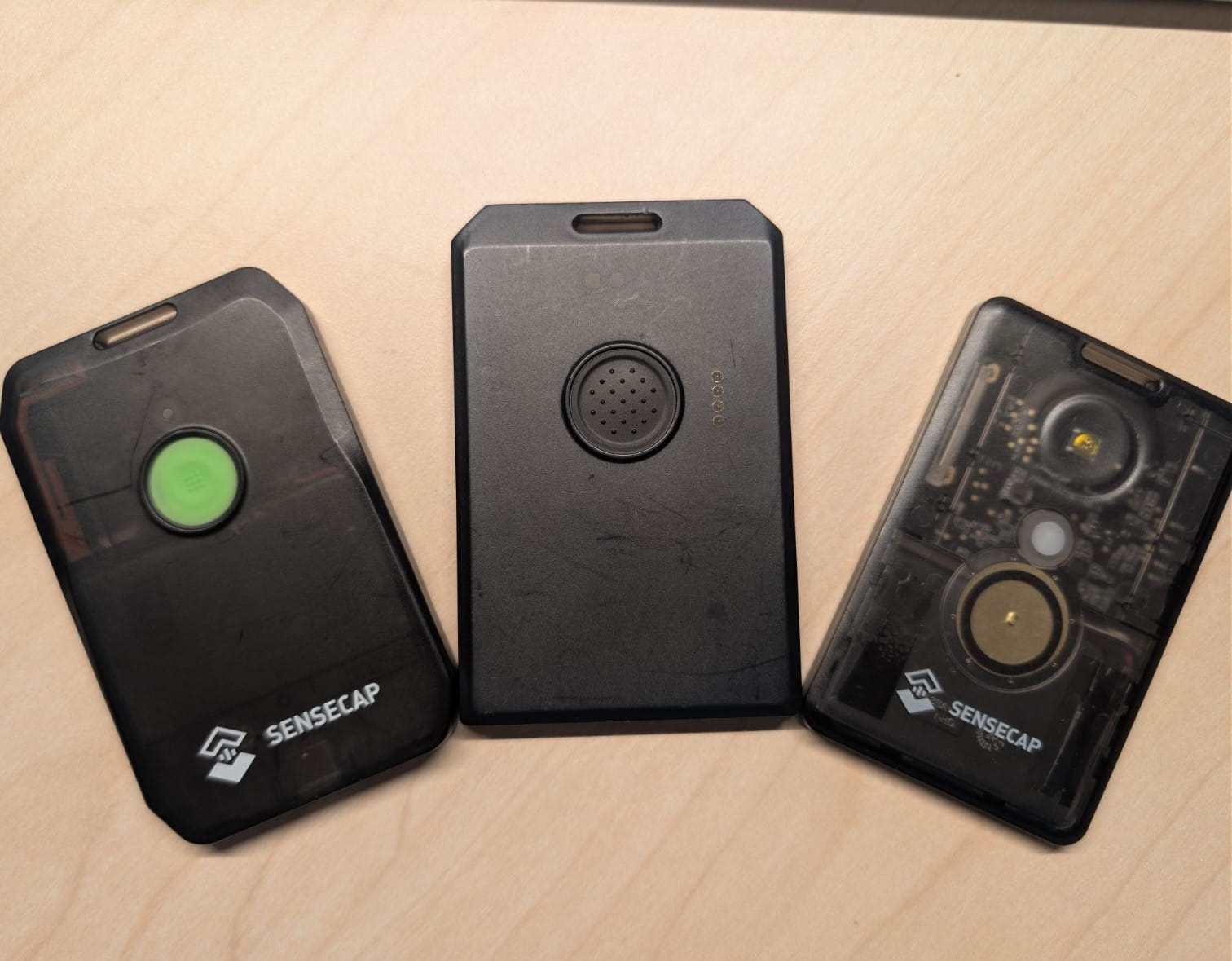
This isn’t a spec sheet writeup. We did that math in the first look, where Seeed’s own engineers confirmed the 22 dBm TX power and clarified the roadmap on MeshCore support. This is the field report.
Full disclosure: Seeed sent us the X1 as a review sample after reading that first look, and every product link in this post is a NodakMesh affiliate link. Everything below is our own field opinion from time on the network. We carried Seeed hardware on our devices pages before the affiliate program existed, and what we recommend hasn’t changed.
Battery Life: The High-Voltage Payoff
Seeed rates the X1 for up to 5 days on its 1100 mAh cell. In our own daily carry on MeshCore we landed at 4.5 to 5 days per charge, about as close to a published number as we’ve ever seen a mesh tracker actually deliver. Part of that is chemistry. This is a 4.4V high-voltage cell, not the 3.7V/4.2V LiPo most trackers ship with, so meaningfully more energy fits in the same physical footprint.
The T1000-E’s 700 mAh cell gets you about a day of active use before you’re hunting for a cable. The WisMesh Tag’s 1000 mAh cell lands closer to the X1’s on paper, but RAK publishes no runtime figure at all for it, and in side by side carry it’s back on the charger days before the X1 is. This isn’t a bigger battery. It’s a different category of battery life.
Reception: The Part That Surprised Us
Carrying all three on the same routes for a month, the X1 has been the clear winner on reception. It’s pulled in traffic in spots that were flat dead to the T1000-E, and it’s held a cleaner link than the WisMesh Tag in the same weak pockets. Same routes, same repeater grid, one radio hearing more than the other two.
Against the T1000-E, the spec sheet backs up what we’re seeing. The LR2021 pushes the same 22 dBm as the T1000-E’s LR1110 (Seeed confirmed both numbers to us directly), but it carries a -141 dBm receive sensitivity spec on top of it. Same shout, better ears. Against the WisMesh Tag’s SX1262 there’s no matching published sensitivity figure to point at, so that half of the comparison stands on field behavior alone.
One caveat we’d rather state than bury. This is field-observed, not instrumented. A month of the same walks with three devices in the same pocket is real evidence, and it still isn’t a logged SNR comparison. We’re working on that follow-up. Until it’s published, take the reception win for exactly what it is: consistent, repeated, and un-instrumented.
USB-C: Finally
We spent a good chunk of our T1000-E review wishing out loud for USB-C instead of pogo pins. The reasoning made sense (pogo pins keep the card thin and fully sealed), but it still meant one more proprietary cable living on the desk.
The X1 charges over USB-C. Same cable as everything else in the bag, no hunting for a magnetic puck, no wondering whether the pins are seated right before you walk out the door. Small thing until you’ve lived without it.
It Buzzes, and That Changes How You Carry It
Tucked inside is a DRV2605L haptic motor, the same class of chip that drives vibration in a phone, and it means an incoming message is something you feel instead of something you’d notice only if you happened to be looking at the app. Clipped to a belt loop or buried in a backpack pocket, that buzz has caught messages we would have missed entirely. Neither the T1000-E nor the WisMesh Tag has anything like it.
What It Costs You
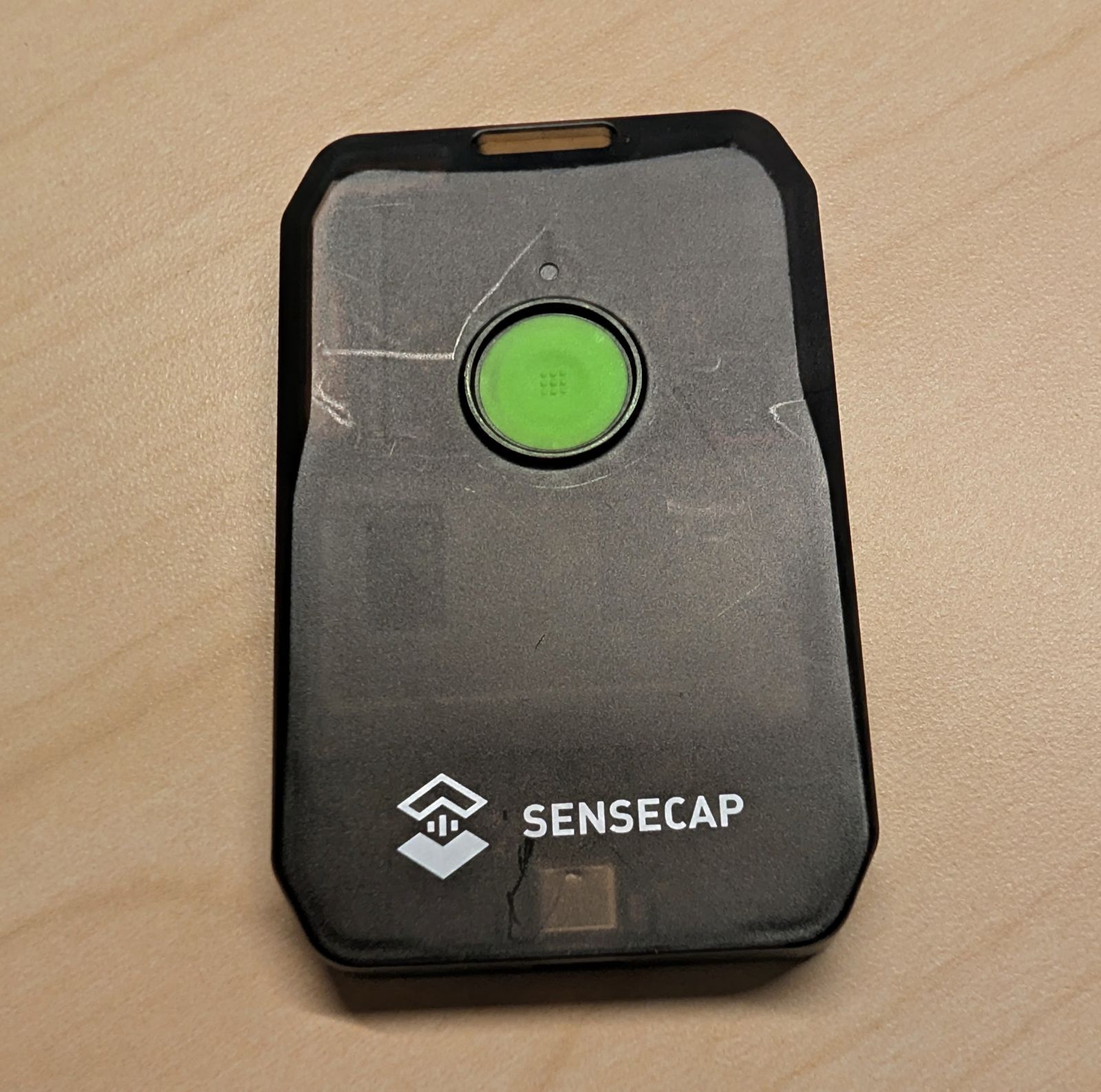
A month of hard carry left marks. The front of ours has visible light scratching around the button and a few finer marks across the case, the kind of wear anything picks up riding next to keys and a multitool. Function is untouched, the button feels the same, the seal is intact. If you want yours looking showroom-fresh, use a pouch or a skin. We didn’t, and we’d make that trade again.
The case is the cosmetic cost. There are three real ones. It’s 8 mm thick, a millimeter and a half more than the T1000-E, and in the stack above it and the Tag are within a hair of each other. It’s $10 more than either alternative. And the LR2021 is new silicon, new enough that our own MeshCore port is what put the radio target in the codebase, and new radio targets get their edges sanded off over several releases rather than on day one.
None of that moved our verdict. All of it is worth knowing before you buy.
How It Stacks Up: X1 vs T1000-E vs WisMesh Tag
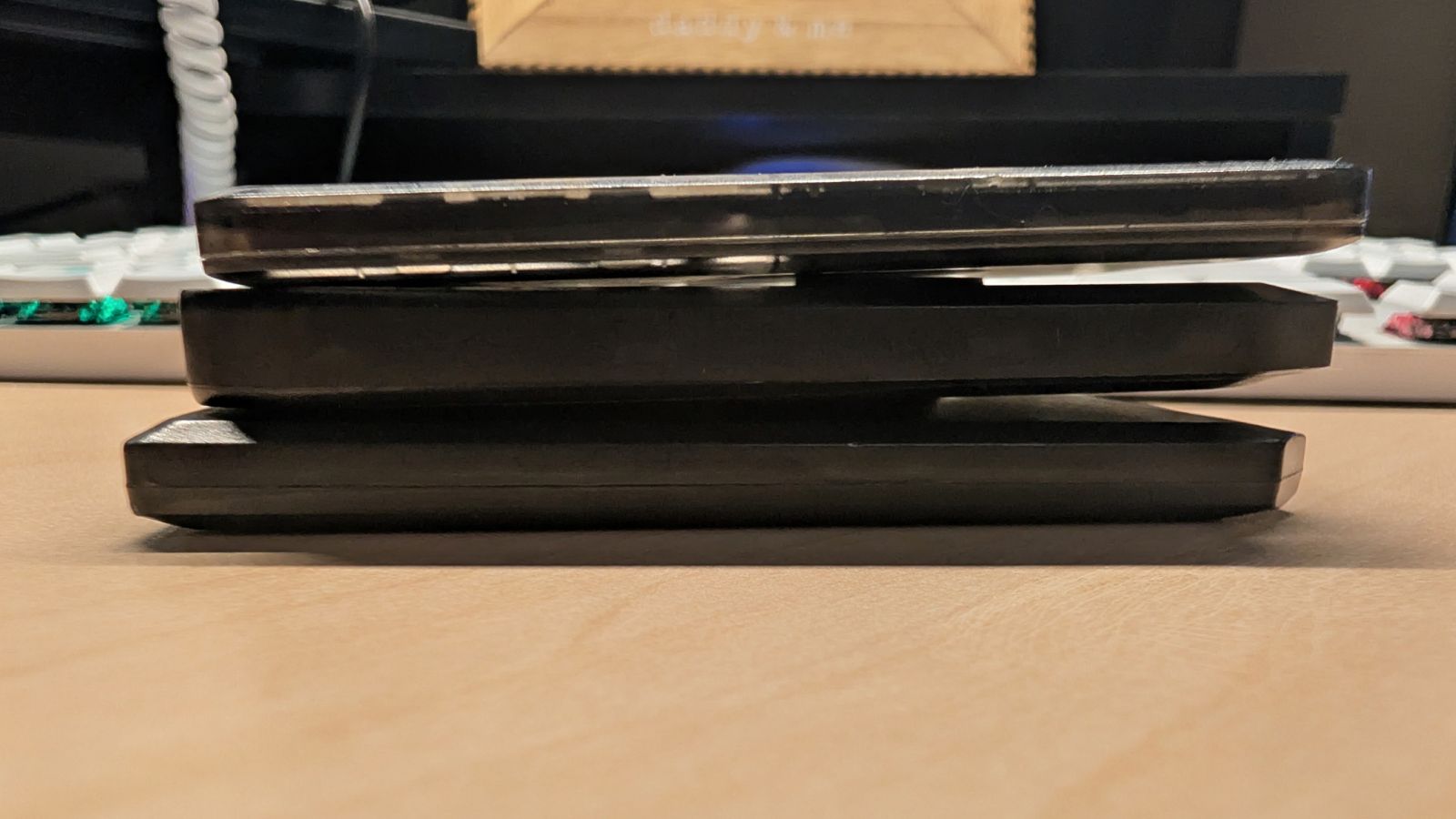
We carry all three of these regularly, so this comparison isn’t theoretical. That’s the T1000-E on top, the X1 in the middle, and the WisMesh Tag on the bottom. The T1000-E’s 6.5 mm reads instantly in that stack. The X1 and the Tag sit close enough that you can’t call it by eye, which is about how much that difference matters in a pocket.
| MeshTracker X1 | SenseCAP T1000-E | RAK WisMesh Tag | |
|---|---|---|---|
| LoRa Radio | Semtech LR2021 (22 dBm, -141 dBm RX) | Semtech LR1110 (~22 dBm) | Semtech SX1262 (RX not published) |
| GNSS | AG3335M, dual-band L1+L5, CEP50 ≤3m | AG3335, band not published | AT6558R, band and accuracy not published |
| Battery | 1100 mAh, 4.4V high-voltage cell, 4.5 to 5 days measured | 700 mAh, ~1 day active | 1000 mAh, no runtime published |
| Charging | USB-C | Pogo pins | Pogo pins, magnetic cable |
| IP Rating | IP66 | IP65 | IP66 |
| Dimensions | 90 x 57 x 8 mm | 85.6 x 54 x 6.5 mm | Not published by RAK |
| Vibration/Haptic | Yes, DRV2605L motor | No | No |
| Firmware | Meshtastic, MeshCore (officially merged in MeshCore 1.17.0) | Meshtastic, MeshCore | Meshtastic, MeshCore |
| Price | $49.90 | $39.90 | $39.00 |
One row in there needs a caveat. The X1 is the only one of the three publishing a dual-band L1+L5 receiver and an accuracy figure, and we haven’t run a controlled GPS accuracy test against the other two. Treat that as a spec sheet advantage, not a measured win.
The WisMesh Tag is the odd one out, and the thing that stands out most is how little RAK publishes about it. No dimensions, no weight, no runtime figure, and an AT6558R GNSS listed with neither band nor accuracy. It’s the cheapest of the three at $39, and what we can tell you is what we’ve watched: it’s the one that loses a fix or drops off the mesh first when conditions go marginal. Reasonable if you’re already standardized on RAK gear. It isn’t the one we reach for.
The T1000-E is still a good card tracker, and we’re not retiring ours. It’s the thinnest of the three, visibly so in that stack, and it’s $10 less than the X1, and if you charge nightly anyway that combination still holds up. Next to the X1 it’s the smaller battery, the pogo pins, and a radio that doesn’t hear as well in the same spots.
Seeed Was Listening
Go back and read our T1000-E review and the wishlist is right there, three items: a bigger battery, USB-C, and an amplified radio variant. The X1 delivers two of them. The battery went from 700 mAh and about a day of active use to 1100 mAh and 4.5 to 5 days, and it charges over USB-C. The third is still open. The X1 pushes the same 22 dBm the T1000-E does, so if what you wanted was a pocket node that could seed its own coverage, this isn’t that device either. Seeed’s engineers also read our first look and wrote back with the TX power figure we’d flagged as missing. Draw your own conclusion about the feedback loop. Ours is that they fixed the two that shape daily carry and left the one that doesn’t.
Built on Firmware We Helped Ship
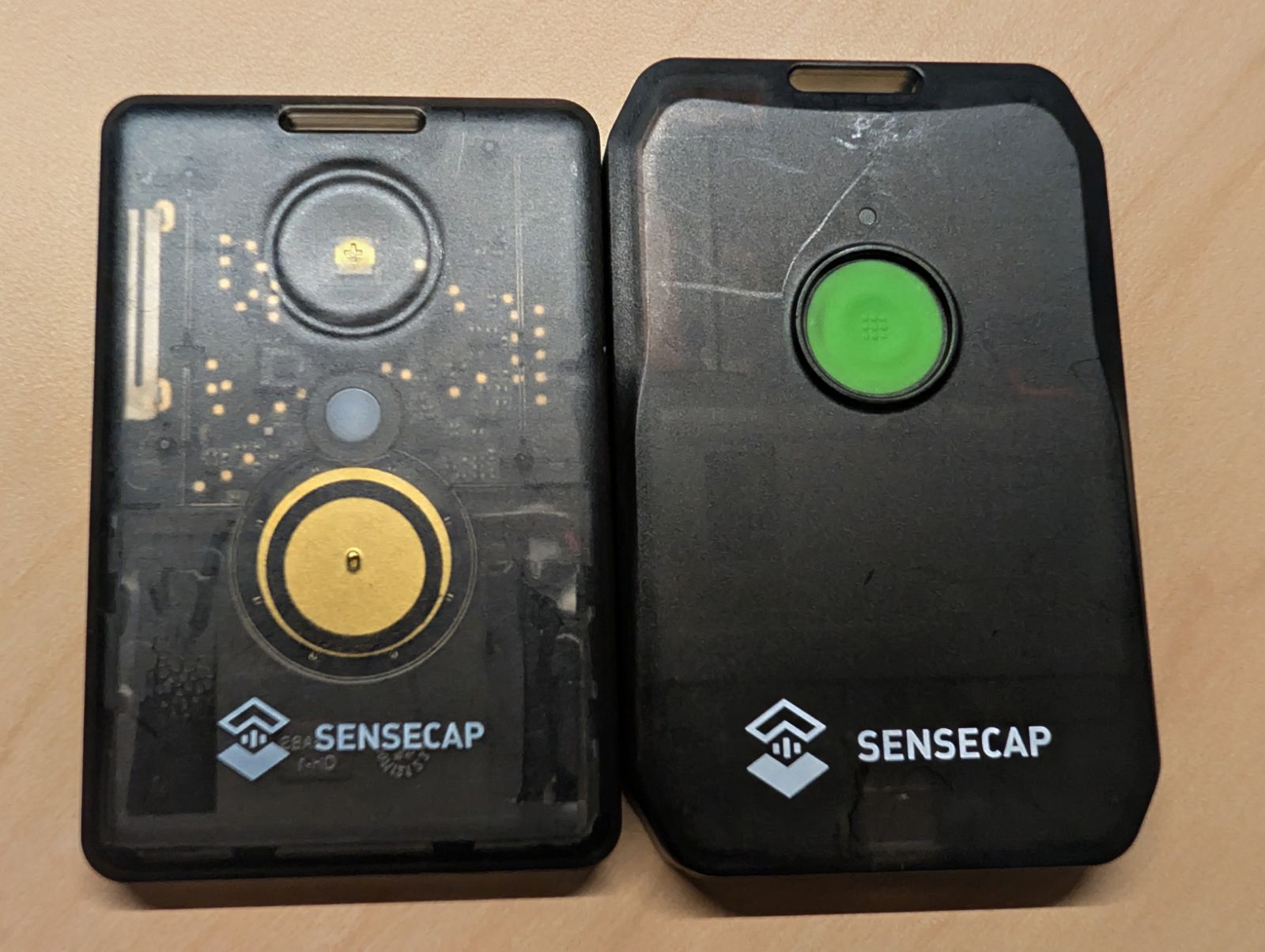
The X1 launched Meshtastic-only. MeshCore’s LR2021 radio wrapper was already in development in the project and RadioLib already had the driver, so the piece we built on top was the X1 itself: the board variant and pin mappings, GPS, battery sensing, and the four build targets, verified on real hardware. That merged upstream and shipped in MeshCore 1.17.0.
The full writeup is here if you want the flashing details. It’s not why we’re recommending the device, but it’s a good thing to know when you flash yours.
Who This Is For
You want a tag-style node. If the node you’re after is the kind you clip to a bag strap or drop in a jacket pocket and forget, this is the current best of that category. No display, no antenna to snap off, no case to build. It pairs to the phone app and it rides along, and the whole class of device lives or dies on whether you keep carrying it after week two. This one we kept carrying.
You’re upgrading from a T1000-E or a WisMesh Tag. This is the clearest case for buying one. The X1 is the same idea as both, executed with four things they don’t have: dual-band L1+L5 GNSS with a published accuracy figure, a haptic motor so messages reach you through a jacket, a 1100 mAh high-voltage cell that runs 4.5 to 5 days instead of one to three, and USB-C instead of pogo pins or a magnetic puck. If those four are exactly the complaints you have with the tag you’re carrying now, the upgrade lands.
You’re not the buyer if you want the thinnest card in the drawer and nightly charging doesn’t bother you, in which case the T1000-E is still the smarter $39.90. Or if you’re standardized on RAK and want the Tag to match the rest of the shelf, though of the three we carry it’s the one we’d pick last.
Verdict
This is our daily carry now, and of the three trackers we rotate, it’s the one that wins outright on the two things we can actually stand behind: reception on the same routes, and 4.5 to 5 days per charge. The haptic motor is the feature we didn’t know we wanted until we had it. The scuffs are cosmetic, the extra millimeter and a half is real, and neither one has knocked it off our belt loop in a month.
If you’re buying one card tracker to carry every day, this is the one we’d hand you. You can find the MeshTracker X1 on Seeed Studio with code 531CRQY1.
Comments
Related Posts
MeshCore's Next Release Ships With the SenseCAP X1 Built In
Our MeshCore X1 port merged upstream and will ship in the next release. Grab the full-feature v2.0.0 build with RGB status and haptics now.
MeshCore Now Runs on the SenseCAP MeshTracker X1
We built and upstreamed the MeshCore board port for the Seeed MeshTracker X1. Grab prebuilt firmware and flash instructions here.
Seeed SenseCAP T1000-E Review: A Pocket Tracker We Carry
Honest review of the Seeed SenseCAP T1000-E. Credit-card LoRa tracker with nRF52840, LR1110 radio, and AG3335 GNSS. Field notes from our network.