First Look: Seeed SenseCAP MeshTracker X1 ($42.90)
SenseCAP MeshTracker X1 pairs dual-band L1+L5 GNSS with Semtech's new LR2021 LoRa chip in an IP66 sealed card. Specs and T1000-E comparison.
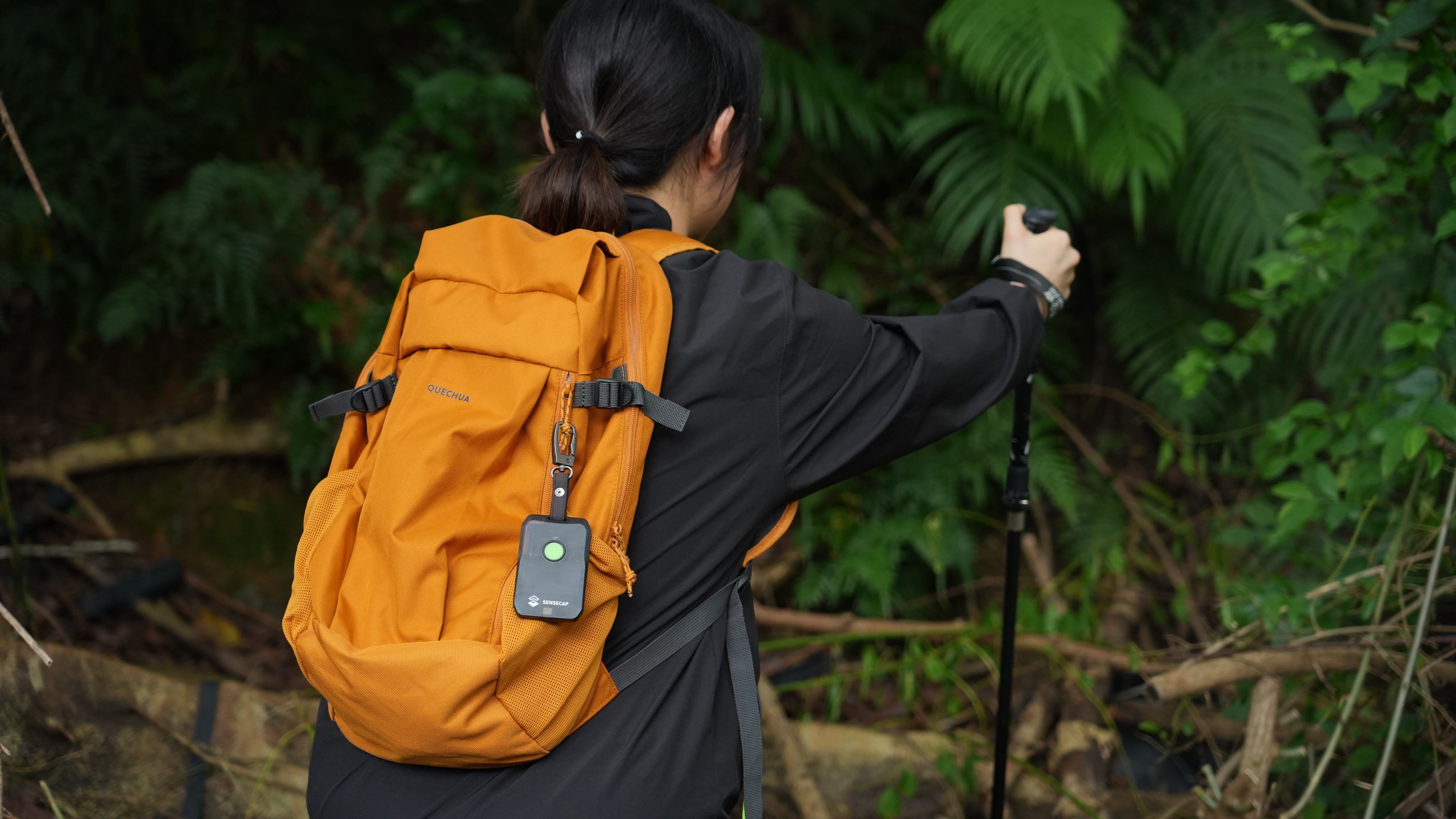
Seeed just listed a new card-sized tracker, and it’s carrying a chip we haven’t seen in a shipping mesh product yet. The SenseCAP MeshTracker X1 pairs a dual-band L1+L5 GNSS receiver with Semtech’s new LR2021 LoRa chip, an IP66-rated enclosure, USB-C charging, and a 1100 mAh battery rated for up to 5 days. It’s $42.90 during an early-bird window that runs through August 14 (regular price $49.90). Seeed is calling it the world’s first card-sized Meshtastic device with dual-band GPS.
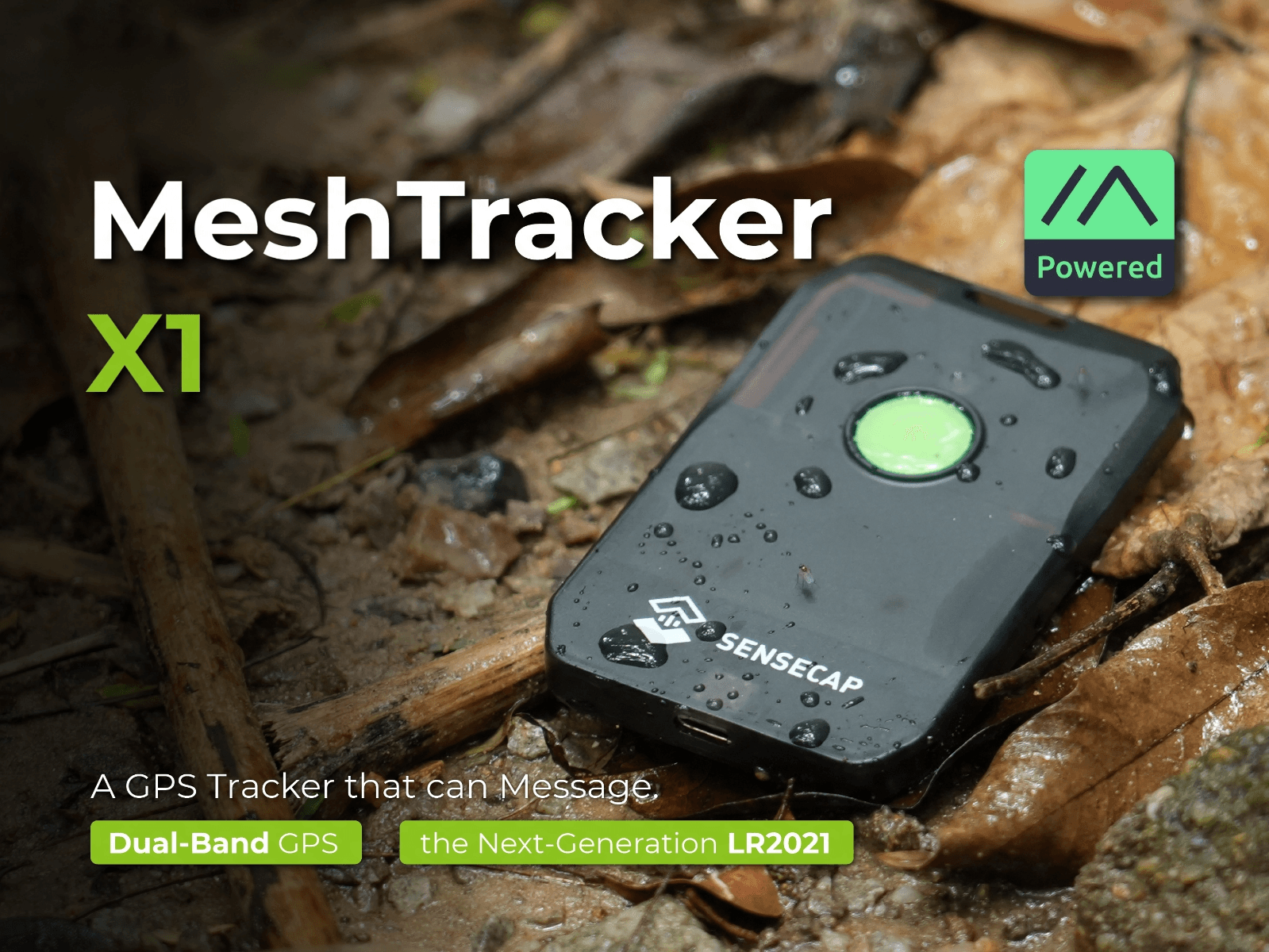
If Seeed’s naming sounds familiar, it should. The SenseCAP T1000-E has been our go-to pocket tracker for months, and the X1 is clearly aimed at the same shelf. Same general mission (small, sealed, GPS-equipped, mesh-connected), different silicon underneath and a noticeably more aggressive spec sheet.
This started as a first look built entirely from Seeed’s product listing and published hardware diagram, no unit on our bench. Since it went up, Seeed’s engineering team read it and reached out directly to fill in a few of the blanks we flagged, and we now have a unit in hand and are starting testing. We’ve updated the sections below with what Seeed confirmed. Anything still marked as open is genuinely open, not yet verified by us hands-on.
What’s Inside the Card
Seeed doesn’t list an MCU on the spec table itself, but their published hardware diagram names it directly: a Nordic nRF52840, the same chip running the T1000-E, the Heltec T096, and most of the BLE-class mesh hardware worth carrying. No surprises there.
The radio is where this thing gets interesting. Seeed swapped the T1000-E’s LR1110 for the newer Semtech LR2021, rated at -141 dBm receive sensitivity and up to 2.6 Mbps in FLRC mode. Seeed’s copy frames the higher data rate as “a foundation for future features like voice and image transmission,” which tells you where they think this chip is headed.
Seeed’s spec table doesn’t list a max TX power figure, but their engineering team confirmed it directly to us: 22 dBm, the same ceiling as the T1000-E’s LR1110. They said they’ll get the number added to the product page. Same output power as the T1000-E, with the LR2021’s better receive sensitivity and data rate layered on top.
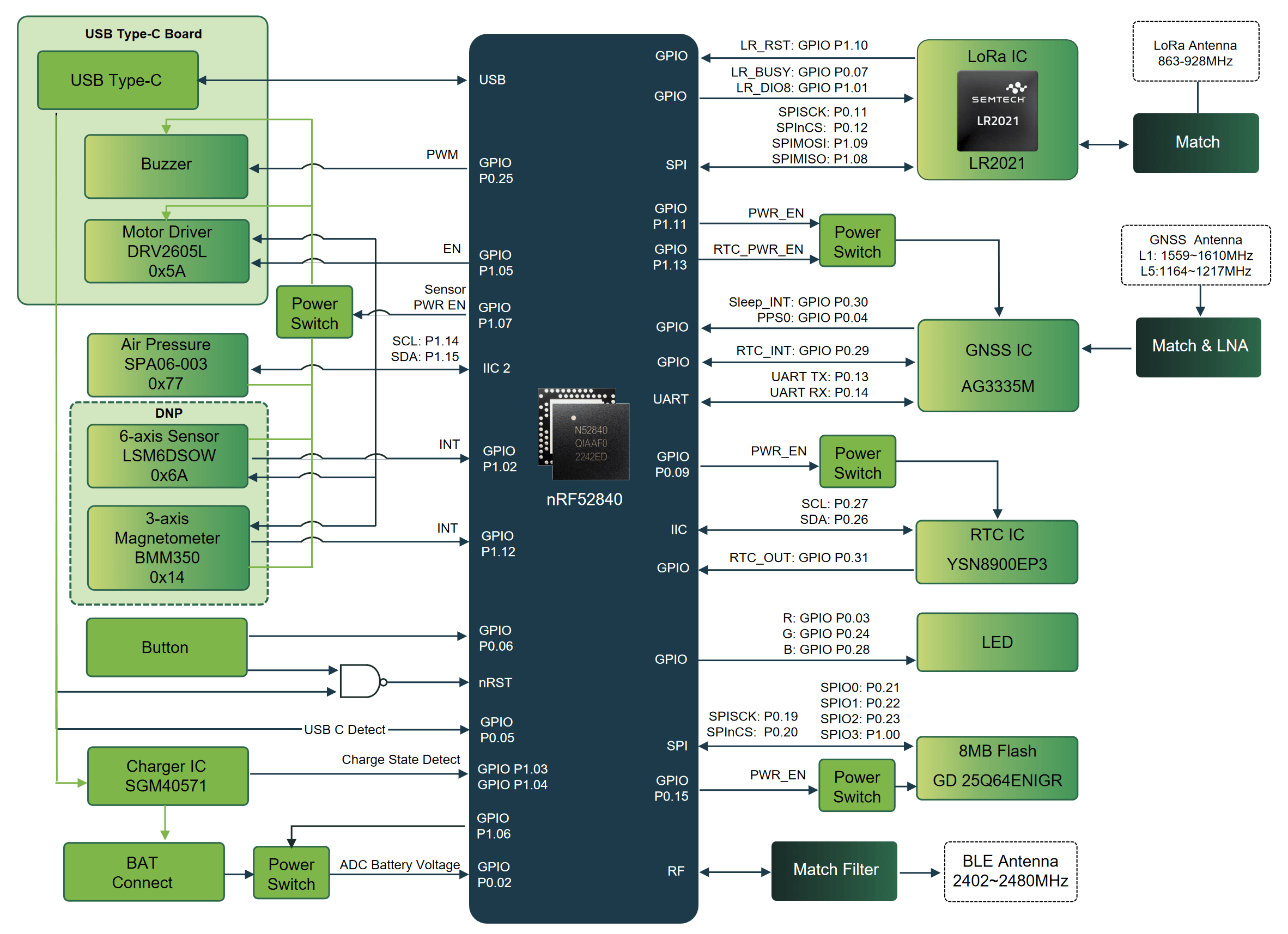
Positioning comes from a Mediatek AG3335M, dual-band L1+L5, according to the block diagram (an M-suffixed variant of the AG3335 in the T1000-E; Seeed doesn’t detail what changed). Seeed publishes accuracy figures we don’t usually see on a device this size: CEP50 ≤3m and CEP95 ≤10m. Dual-band GNSS resolves multipath error that trips up single-band L1-only receivers, particularly around buildings and tree canopy, so tighter accuracy tracks with the hardware claim.
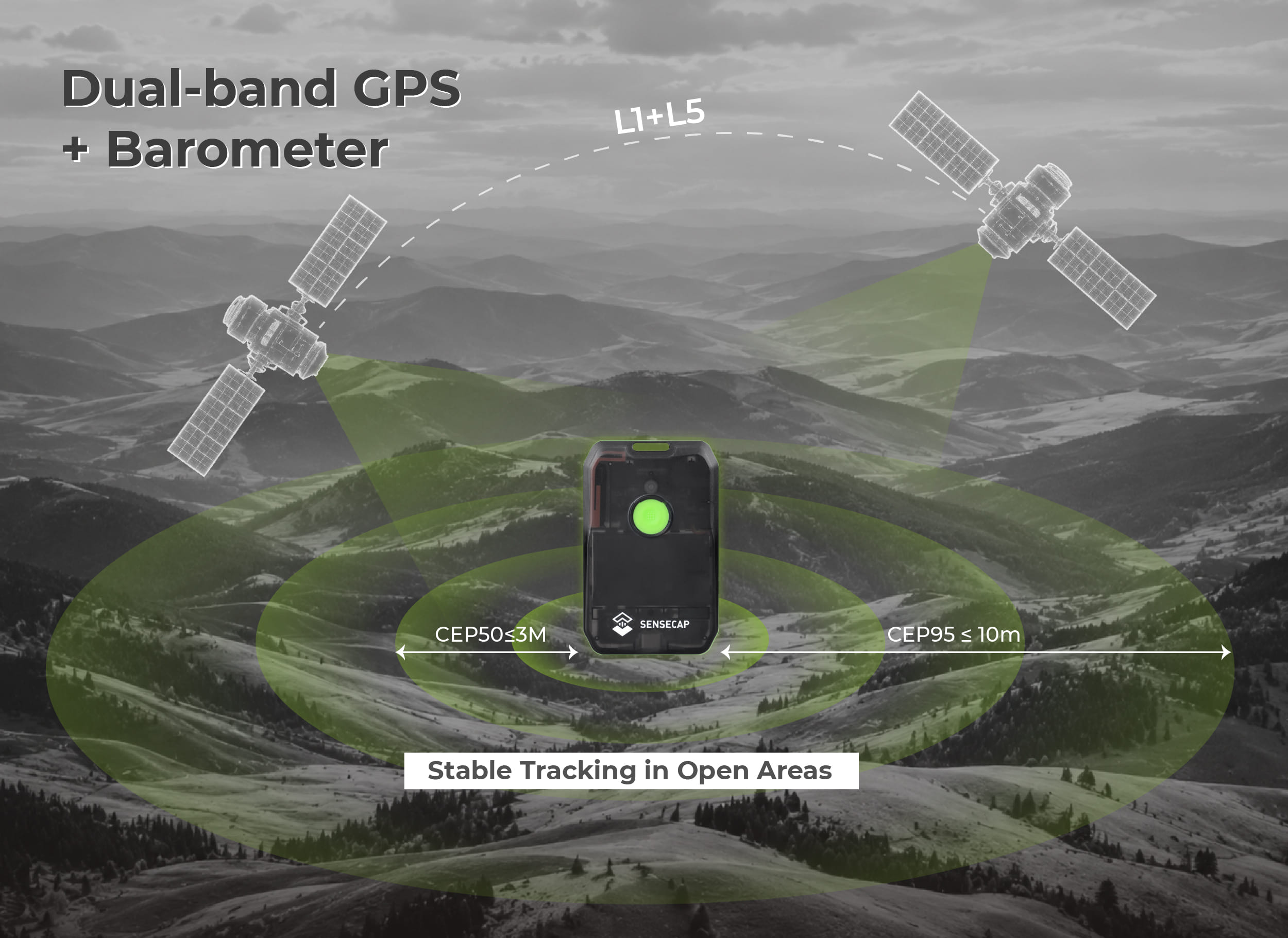
The rest of the diagram fills in parts the spec table skips. There’s a DRV2605L haptic motor driver for vibration alerts, an SPA06-003 barometer that also reports temperature, an 8MB flash chip, and a dedicated RTC IC. The originally published diagram also marked footprints for an LSM6DSOW 6-axis IMU and a BMM350 magnetometer as DNP (do not populate).
Seeed’s engineering team clarified those two aren’t destined for this device at all. They’re building out a broader SenseCAP tracker product series, and sensors like these could show up on a future entry in that line rather than a revision of the X1 itself. Worth knowing if you were hoping motion sensing lands here later. Per Seeed, it’s a different product, not a firmware update away.
Power, Charging, and Where MeshCore Stands
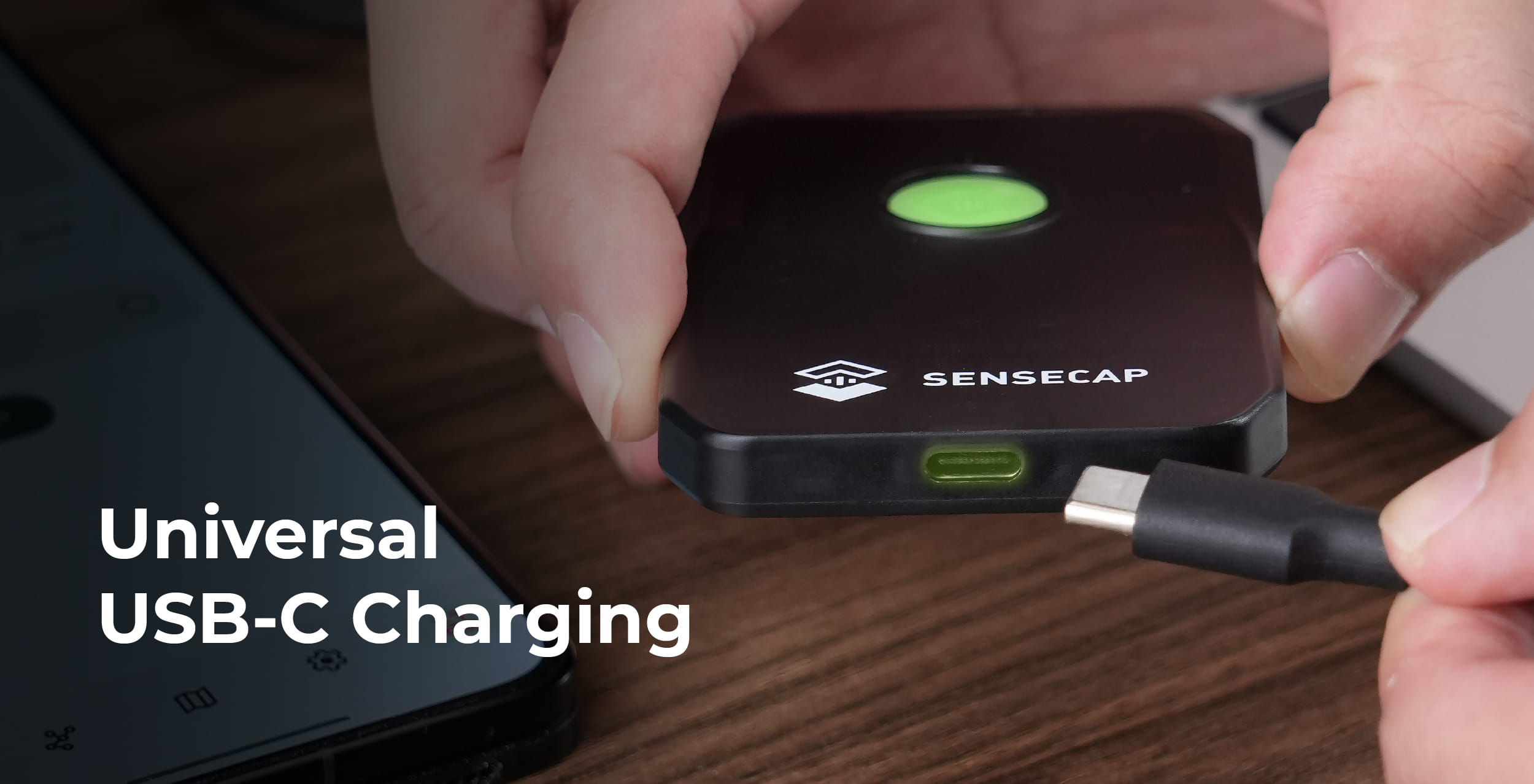
The 1100 mAh battery is a real jump from the T1000-E’s 700 mAh, and Seeed rates it for up to 5 days. Charging is USB-C at 5V/0.55A, a straightforward upgrade over the T1000-E’s pogo-pin puck. One cable, one port, done.
Here’s the gap we flagged originally: Seeed’s listing mentions Meshtastic throughout and never once mentions MeshCore. The T1000-E runs both. Seeed’s engineering team told us directly that they’re working with the MeshCore team on compatibility and have already sent over samples for testing. We didn’t want to just wait on that, so we built our own MeshCore port for the X1 and submitted it upstream. It’s a community build, not an official release, but if you want MeshCore on your X1 today, it’s already out there.
Full Specs
| Spec | Detail |
|---|---|
| MCU | nRF52840 (per Seeed’s hardware diagram; not listed in the spec table) |
| LoRa Chip | Semtech LR2021 |
| RX Sensitivity | -141 dBm |
| Data Rate | Up to 2.6 Mbps (FLRC mode) |
| Max TX Power | 22 dBm (confirmed directly by Seeed; not yet listed on their spec page) |
| GNSS | Mediatek AG3335M, dual-band L1+L5 |
| GPS Accuracy | CEP50 ≤3m, CEP95 ≤10m |
| Barometer | SPA06-003 (altitude and temperature) |
| Motion Sensors | None on this device; LSM6DSOW/BMM350 footprints on the original diagram are reserved for a possible future product in Seeed’s SenseCAP tracker line, per Seeed |
| Haptic Motor | DRV2605L |
| Bluetooth | v5.0 |
| LED | 1x RGB |
| Buzzer | 1x |
| Button | 1x |
| Battery | 1100 mAh rechargeable lithium |
| Battery Life | Up to 5 days |
| Charging | USB-C (device 5V/0.55A, battery 4.4V/220mA) |
| Antenna | Internal only (GNSS/LoRa/Bluetooth) |
| Communication Distance | Up to 8 km (915 MHz, line-of-sight, per Seeed) |
| IP Rating | IP66 |
| Operating Temp | -20 to 60°C |
| Dimensions | 90 x 57 x 8 mm |
| Firmware | Meshtastic; official MeshCore support in development per Seeed, and a community MeshCore port is already flashable |
| In the Box | MeshTracker X1, 20cm USB-C cable, leather keychain |
| Certification | CE / FCC / RoHS / TELEC |
| Price | $42.90 early bird through Aug 14 (regular $49.90) |
How It Compares to the SenseCAP T1000-E
Seeed’s own FAQ on the product page actually poses this comparison directly, which tells you they know these two products compete for the same slot in your pocket.
| MeshTracker X1 | SenseCAP T1000-E | |
|---|---|---|
| MCU | nRF52840 | nRF52840 |
| LoRa Chip | Semtech LR2021 | Semtech LR1110 |
| Max TX Power | 22 dBm (confirmed by Seeed) | ~22 dBm (~158 mW) |
| GNSS | AG3335M, dual-band L1+L5 | AG3335, band not specified |
| Extra Sensors | Barometer, haptic motor, RGB LED | Accelerometer + light sensor (present, not exposed), temp sensor, buzzer |
| Battery | 1100 mAh | 700 mAh |
| Battery Life | Up to 5 days | ~1 day active, days on standby |
| Charging | USB-C | Pogo pins |
| IP Rating | IP66 | IP65 |
| Firmware | Meshtastic officially; MeshCore via community port or Seeed’s in-development official support | Meshtastic + MeshCore |
| Dimensions | 90 x 57 x 8 mm | 85.6 x 54 x 6.5 mm |
| Price | $42.90 (early bird) / $49.90 | $39.90 |
On paper, the X1 wins most of the individual categories: bigger battery, better-rated GNSS, IP66 over IP65, USB-C over pogo pins, and now a confirmed TX power that matches the T1000-E exactly. The remaining difference is firmware polish. The T1000-E ships with MeshCore out of the box; the X1 gets there via our community port until Seeed’s own official support ships.
If you want officially supported MeshCore with zero flashing required, the T1000-E is the safer pick. If you want the newest hardware, a bigger battery, USB-C, and you’re comfortable flashing a community build (or you’re Meshtastic-only anyway), the X1 is worth watching closely.
What We’re Testing Now
With a unit finally in hand, here’s what we’re putting through actual paces instead of reading off a spec sheet:
Real-world range and RF performance. Seeed confirmed 22 dBm on paper, matching the T1000-E’s output exactly. We want to see whether the LR2021’s improved receive sensitivity translates into a real range advantage on our own repeater grid, not just a better number on paper.
Real-world GPS accuracy. CEP50 ≤3m is a strong claim for a device this size. Dual-band L1+L5 GNSS should get there in open sky. We want to see it hold up under tree canopy and around buildings before taking the number at face value.
Battery life against Seeed’s 5-day claim. Same scrutiny we give every tracker: whether it holds up under our actual usage pattern, not a lab test.
Whether Seeed’s official MeshCore support lands. Seeed’s own samples are still with the MeshCore team for compatibility testing. In the meantime, we built and upstreamed our own MeshCore port for the X1, so MeshCore is already flashable today even before Seeed’s official support ships.
The voice and image transmission roadmap. Seeed explicitly frames the LR2021’s 2.6 Mbps FLRC mode as groundwork for future features. Worth watching what actually ships versus what stays aspirational.
Who This Card Is For
If you want the newest hardware in this class (bigger battery, USB-C, IP66) and you run a Meshtastic-only network, the X1 looks like a strong upgrade over the T1000-E on paper.
If you need officially supported MeshCore today, the T1000-E is still the safer pick until Seeed ships their own X1 support. If you’re comfortable flashing a community build, our own MeshCore port for the X1 is already out and verified on real hardware.
We now have a unit in hand and testing is underway. We’ll follow up with a full review once we’ve verified real-world range, GPS accuracy, and battery life, and once we know more about MeshCore’s timeline. Until then, consider this confirmed on the specs that matter most and still open on the ones only hands-on time can answer.
You can find the MeshTracker X1 on Seeed Studio with code 531CRQY1.
Comments
Related Posts
SenseCAP Solar Node P1-Pro Review: Our Go-To Solar Repeater
SenseCAP Solar Node P1-Pro review: months on the roofline, a 19km link, and a battery that just works. One nitpick: RP-SMA.
Seeed SenseCAP T1000-E Review: A Pocket Tracker We Carry
Honest review of the Seeed SenseCAP T1000-E. Credit-card LoRa tracker with nRF52840, LR1110 radio, and AG3335 GNSS. Field notes from our network.
GAT562 30s Mesh Solar Repeater: 1W nRF52840 for $39.99
GAT562 30s pairs an nRF52840 with a 1W LoRa stage and direct solar pads for $39.99. Specs, the no-MPPT story, and RAK WisMesh 1W comparison.