RAK WisMesh 1W Booster Starter Kit: 1 Watt LoRa for $39
RAK's WisMesh 1W Booster Starter Kit pairs an nRF52840 with a 1W SX1262 PA and SAW-filtered receiver. Full specs and RAK4631 comparison.
RAKwireless just released a mesh node that ships with a real power amplifier. The WisMesh 1W Booster Starter Kit (RAK10724) pairs a Nordic nRF52840 with a 1-watt LoRa radio on a standard WisBlock base board. No soldering, no custom RF work. You get significantly longer range than a typical Meshtastic node right out of the box. Priced at $39.
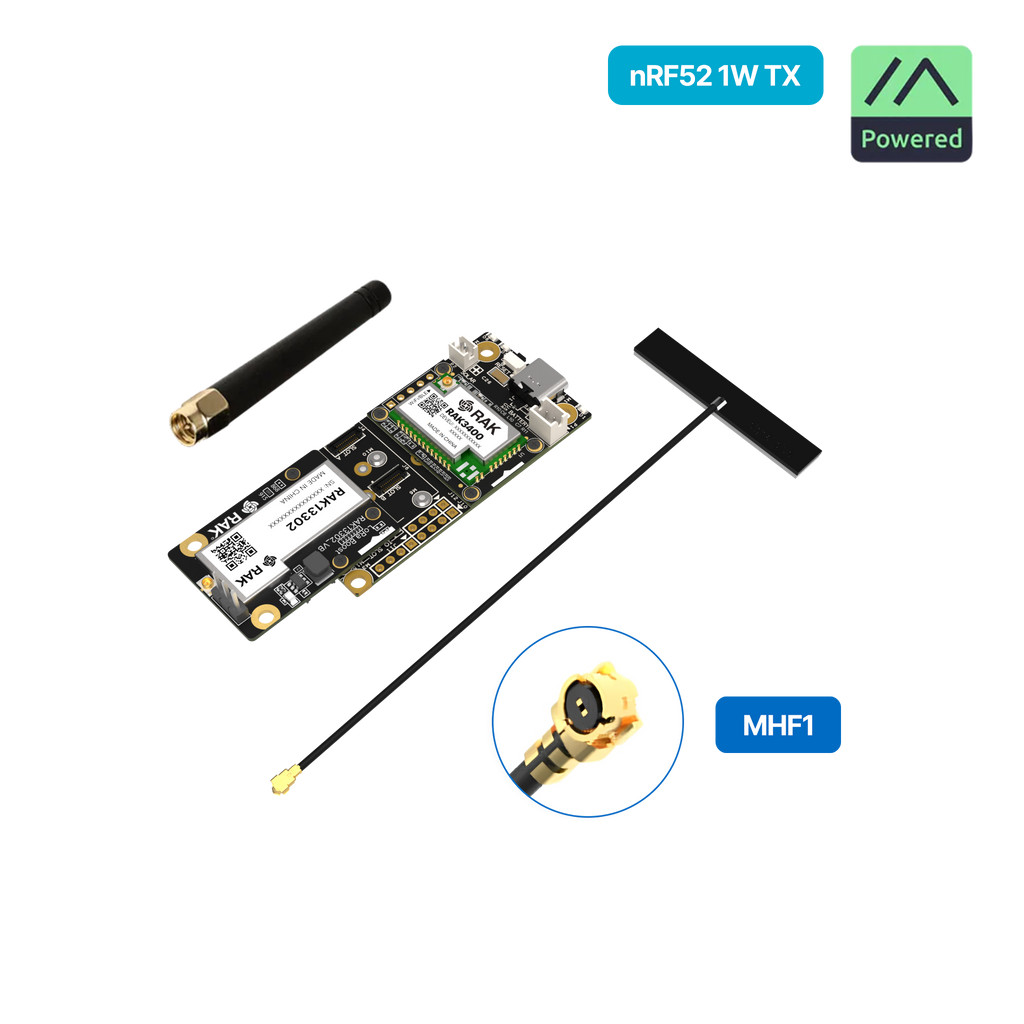
The kit includes the RAK3401 core module (nRF52840 MCU with BLE), the RAK13302 1W LoRa radio module, the RAK19007 base board, antennas, cables, and mounting hardware. It ships pre-flashed with Meshtastic.
We don’t have one on our bench yet. Everything below is pulled from RAKwireless documentation and the published RF chain schematic. When we have one deployed on our network, we’ll update this post with actual range and power numbers.
A High-Power Addition to the WisBlock Family
If you know WisBlock, you know it’s modular. Base board, core module, optional sensors. The WisMesh 1W kit follows that pattern. A RAK3401 core (nRF52840 with BLE) paired with the RAK13302 LoRa transceiver, mounted on the RAK19007 base board. Together they make a Meshtastic-compatible node with real range. Think of it as the long-distance option in the WisBlock lineup: more power draw, much better reach.
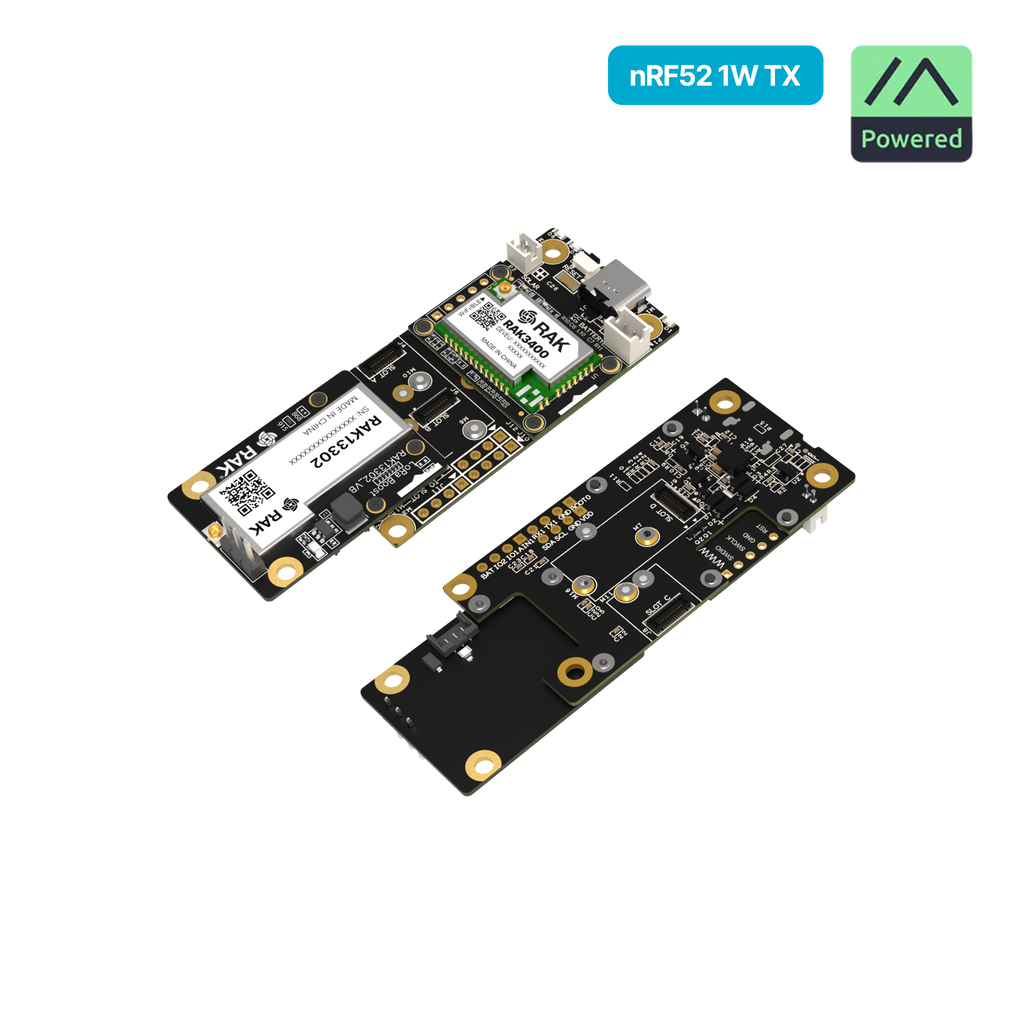
The base board has multiple expansion slots. Want a weather station that also relays messages? Add sensor modules. Need GPS tracking? Snap in a GPS module. No soldering. The 1W kit isn’t a closed box. It’s a platform you can build on.
What Makes It Different
Most LoRa mesh nodes (including the RAK4631) transmit at 100 to 160 mW (20 to 22 dBm). Fine for around town, limiting in open country or hilly terrain. The WisMesh kit pushes 1 watt (30 dBm). That’s nearly 10x the power. You can cover several times the distance. Valley-scale coverage from a single node instead of neighborhood-scale.
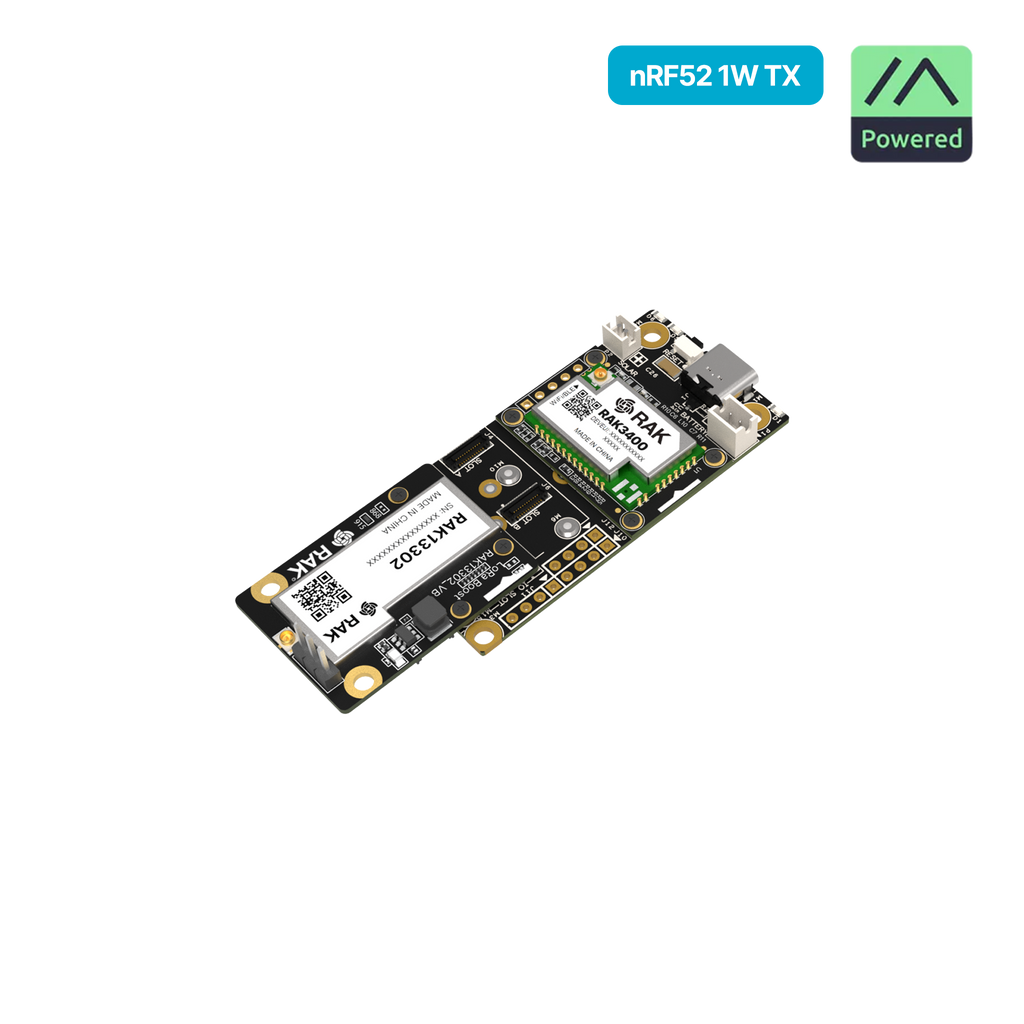
RAK didn’t just bolt on a stronger amp. The RAK13302 module includes a Skyworks SKY66122 power amplifier plus an integrated SAW filter and LNA for the receiver. This matters because many high-power LoRa setups blast out signals but can’t hear replies. The amp desensitizes the receiver. The filtered front-end here keeps receive sensitivity strong even at 1W output. Better transmission and better reception.
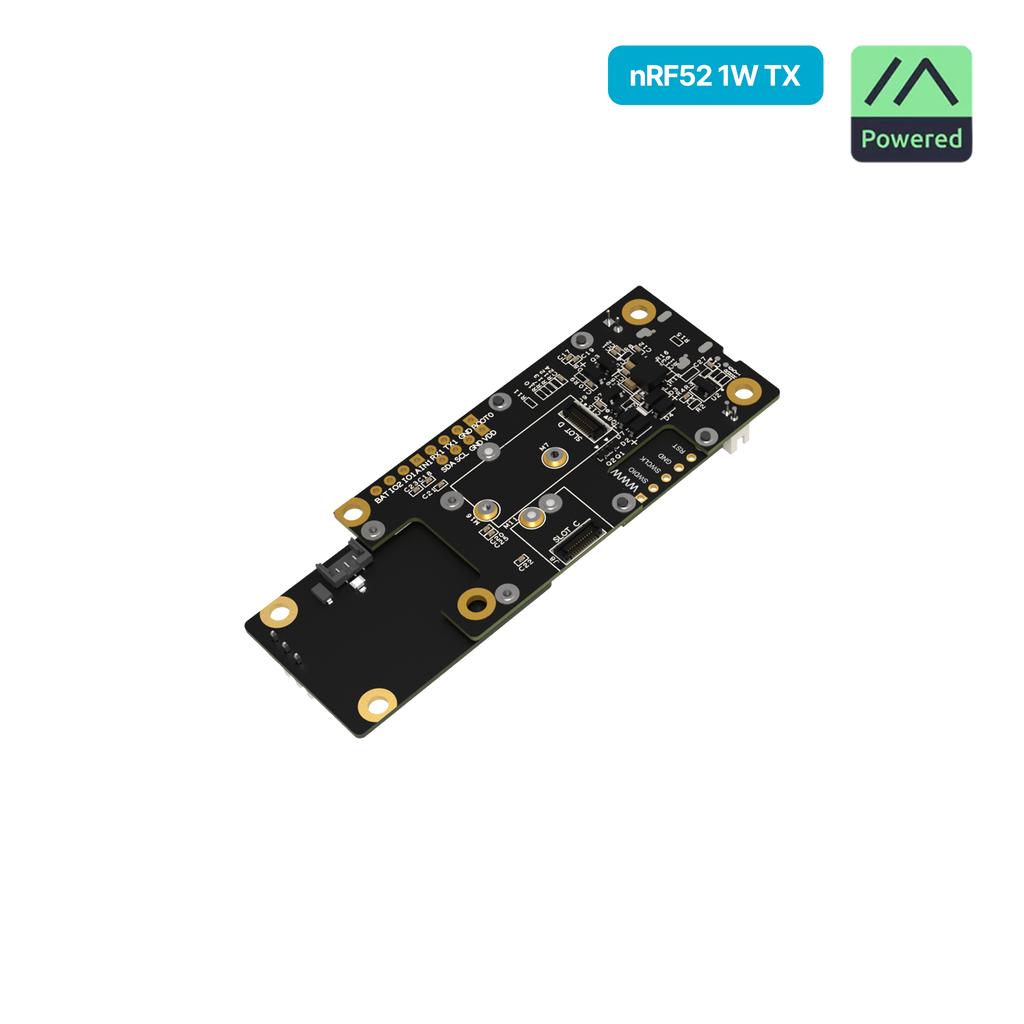
The nRF52840 MCU is a known quantity. It’s in plenty of IoT devices and handles Meshtastic well. BLE support for phone configuration, enough flash and RAM for complex firmware, low power when idle. The kit ships with Meshtastic pre-loaded, so you can power it on and start messaging immediately.
Full Specs
| Spec | Detail |
|---|---|
| MCU | nRF52840 (RAK3401 core) |
| LoRa Chip | SX1262 with external PA (RAK13302 module) |
| PA | Skyworks SKY66122 |
| Max TX Power | 1W (30 dBm) |
| Receiver Front-End | SAW filter + LNA |
| Bluetooth | BLE |
| USB | Type-C (RAK19007 base) |
| Battery | Li-Ion via onboard connector |
| Solar Input | Yes (on base board) |
| GPIO | WisBlock expansion slots |
| Firmware | Meshtastic (pre-installed), MeshCore not yet supported |
| Power Source | USB-C, Li-Ion, or solar with battery backup |
| Price | $39 |
How It Compares to a Standard RAK4631 Node
If you’re coming from a RAK4631 setup, here’s what changes. For the deeper spec-level comparison, see our RAK WisMesh 1W vs RAK4631 post.
| WisMesh 1W Kit | RAK4631 | |
|---|---|---|
| MCU | nRF52840 (RAK3401) | nRF52840 (integrated) |
| LoRa Chip | SX1262 + SKY66122 PA | SX1262 (no PA) |
| Max TX Power | 30 dBm (1W) | 20 dBm (~100 mW) |
| Receiver Filtering | SAW filter + LNA | Standard |
| Architecture | Separate MCU and radio modules | MCU + radio combined |
| Power Draw (TX) | Higher, needs USB or battery | Lower, runs from 3.3V |
| Expansion | WisBlock base with 4 slots | WisBlock base with 4 slots |
| Firmware | Meshtastic | Meshtastic, MeshCore |
| Price | $39 | ~$35 |
The main event is TX power. 30 dBm vs 20 dBm. Range goes from hundreds of meters to multiple kilometers depending on terrain. Where a standard node starts dropping packets, the 1W kit keeps going.
The receiver matters just as much. The WisMesh kit has a dedicated SAW filter and LNA. Standard nodes don’t. The RAK4631’s receiver is decent, but the WisMesh kit picks up weaker signals. No point in shouting if you can’t hear the reply.
Architecturally, the RAK4631 integrates the LoRa transceiver into the core module. The WisMesh kit separates them. RAK3401 handles MCU and BLE, RAK13302 handles the radio. This means you could theoretically swap radio modules later. For most users, the kit comes pre-assembled and works the same way.
On power, standard nodes sip from a 3.3V supply. The 1W module needs more. It can’t run from 3.3V alone. Use USB, a Li-Ion battery, or solar with battery backup. The base board supports all three. At 1W, expect higher current draw during transmission, so plan your power budget accordingly.
Setup is still straightforward. Same Meshtastic app, same web interface. The extra power happens automatically.
Field Ready
RAK built this for outdoor deployments. The RAK19007 base has USB-C for power and programming, a battery connector, and a solar panel input. Mount it on a hilltop with a solar panel and battery, and it’ll run indefinitely. The kit includes the cables you need for battery hookup.
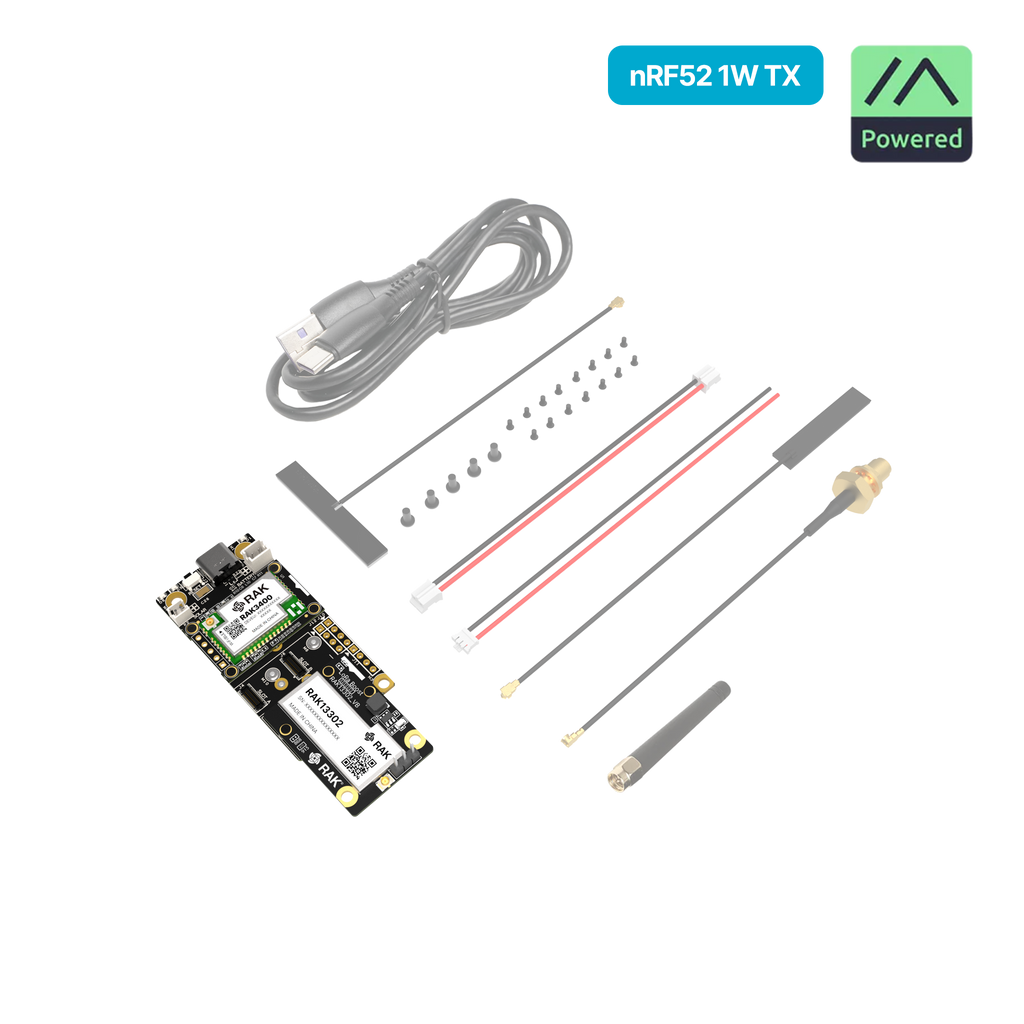
The base board has four expansion slots. Add GPS for location tracking, environmental sensors for monitoring, or an OLED display for on-site status. All WisBlock modules use standard connectors, so mixing and matching is easy. Start with a basic mesh node, add capabilities as needed.
The physical build is solid. RAK includes screws to secure the modules, which matters if you’re mounting this somewhere it’ll get bumped around. The RF design handles heat from the PA properly.
Firmware Support
Meshtastic works today. RAKwireless ships the kit with it pre-installed, and the official Meshtastic project has a dedicated firmware target for the RAK3401 + RAK13302 combo. Use the standard apps (Android, iOS, web) to configure it. Your 1W node talks to regular nodes just fine. It just reaches further.
MeshCore doesn’t support this hardware yet as of January 2026. The nRF52840 + SX1262 foundation is common enough that support will probably come. For now, Meshtastic is the option.
What We’re Watching
Receive sensitivity at full power. The SAW filter and LNA should keep the front-end listening while the PA is blasting 30 dBm, but we want to measure it ourselves before calling it solved.
Thermal behavior. 1W sustained is a different game than 100 mW. In a solar-powered outdoor box in summer, how does the PA age? Does it throttle?
Power budget. TX current at 30 dBm is going to be real. We’ll want to map actual charge/discharge behavior on a solar node with this kit versus a stock RAK4631.
Firmware support expansion. MeshCore arriving would make this kit significantly more useful, especially for people building structured multi-repeater deployments.
Who This Kit Is For
If you’re building a remote repeater that needs to cover a valley or a large rural property, the WisMesh 1W kit is the cleanest off-the-shelf answer we’ve seen at this price. An amplified WisBlock node with a filtered receiver and solar charging for $39 is a serious value.
If you’re running handheld nodes in town or on a neighborhood mesh, a stock RAK4631 or Heltec V3 is probably still the right tool. You don’t need 30 dBm to reach across a suburb, and the higher TX draw on the 1W kit hurts battery life on a pocket node.
If you want to run MeshCore today, wait. The hardware will get MeshCore support eventually, but Meshtastic-only right now is a real constraint for anyone deploying multi-repeater structured meshes.
You can get the RAK WisMesh 1W Booster Starter Kit for $39 from the RAKwireless store.
New to mesh networking? Start with the Meshtastic getting started guide, the MeshCore getting started guide, or browse compatible devices.
Comments
Related Posts
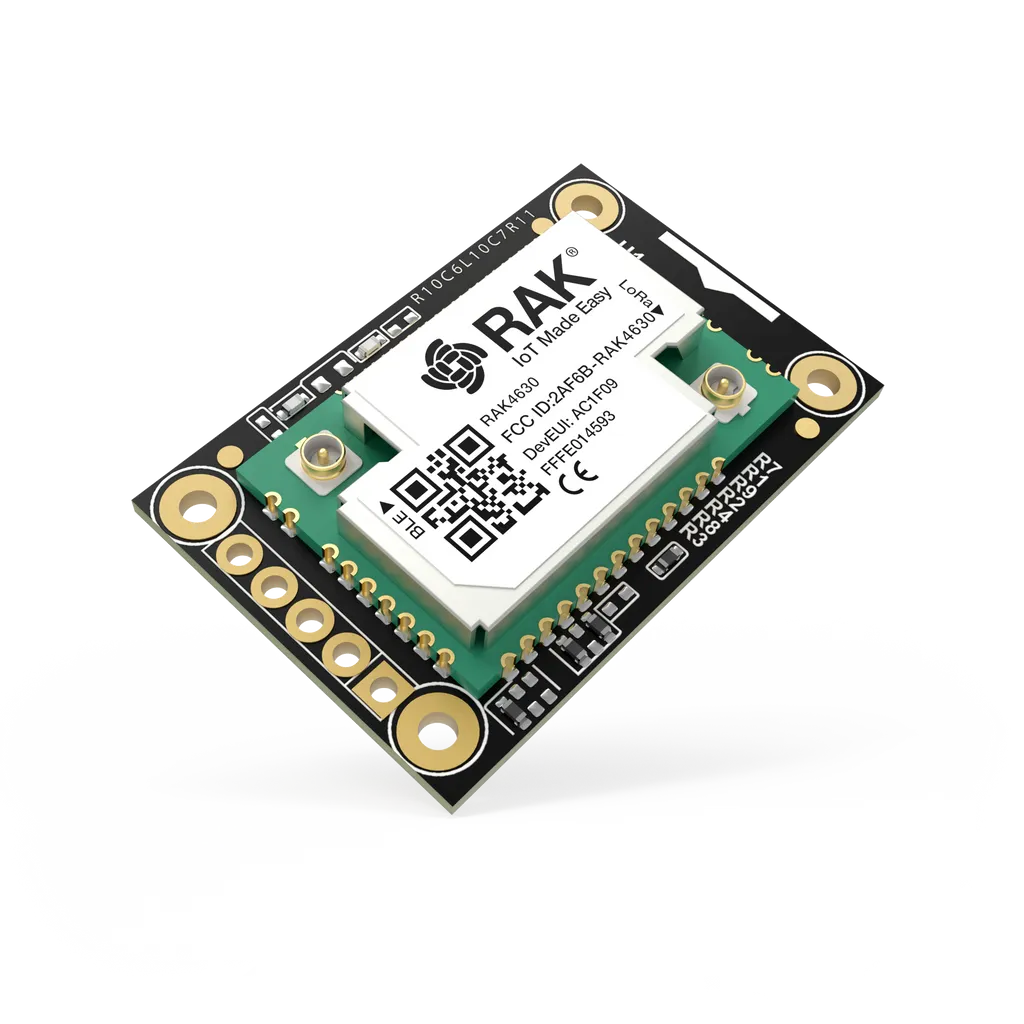
RAK WisMesh 1W vs RAK4631: Which WisBlock to Buy
Hardware comparison of the RAK WisMesh 1W Booster (RAK10724) and the RAK4631 WisBlock. TX power, receiver, power draw, firmware support, price.
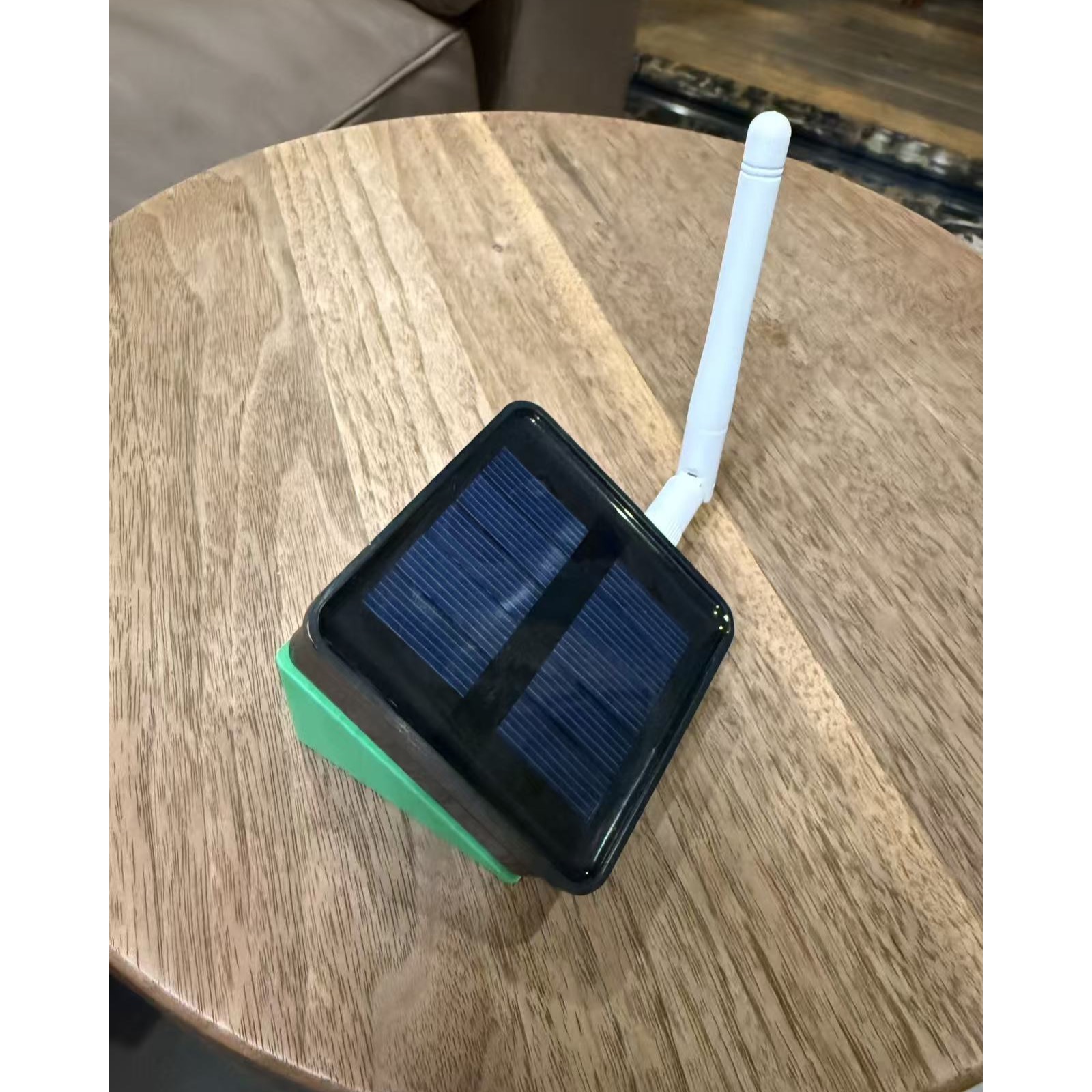
GAT562 30s Mesh Solar Repeater: 1W nRF52840 for $39.99
GAT562 30s pairs an nRF52840 with a 1W LoRa stage and direct solar pads for $39.99. Specs, the no-MPPT story, and RAK WisMesh 1W comparison.
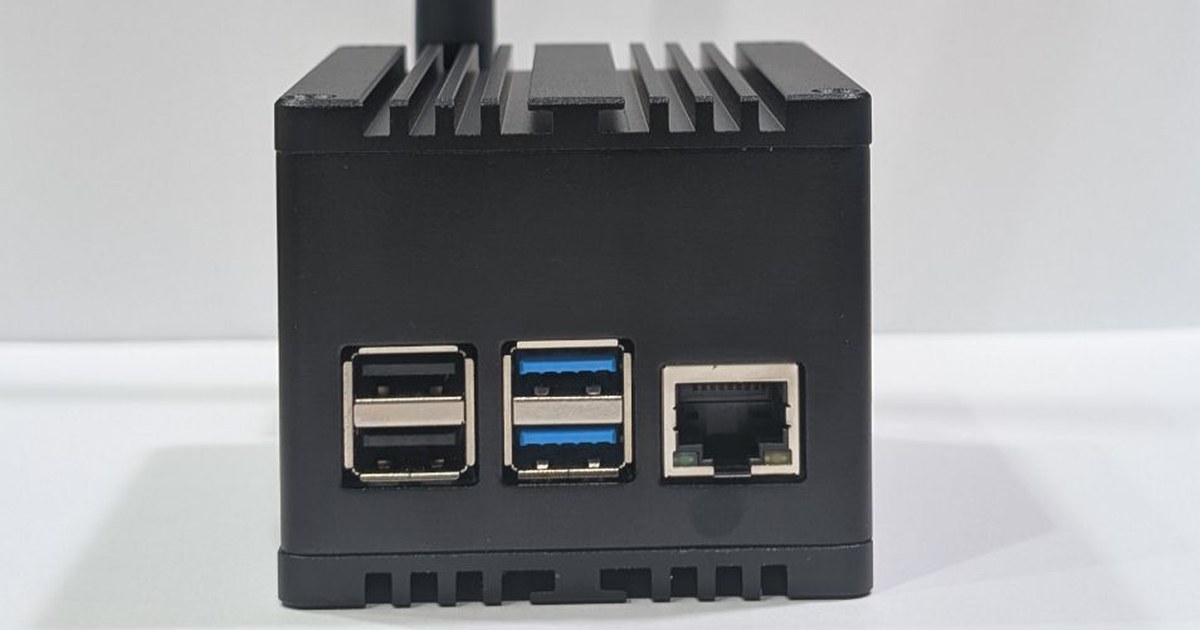
RAK WisMesh Station HP: First Look at a Pi 4 Mesh Node
RAK's WisMesh Station HP puts a Raspberry Pi 4, a WisBlock HAT, and a 1-watt-class SX1262 in a finned aluminum case. Hardware tour and what it runs.