Heltec WiFi LoRa 32 V3 Review: The Default Mesh Board
Field review of the Heltec V3 for Meshtastic and MeshCore. ESP32-S3, SX1262, OLED, USB-C. Why it's still our default recommendation.
We’ve been running Heltec WiFi LoRa 32 V3 boards across our mesh for a good while. Portable nodes. Fixed relays. A couple of base stations. They’ve been our default ESP32 platform through two firmware ecosystems and a lot of antenna swaps.
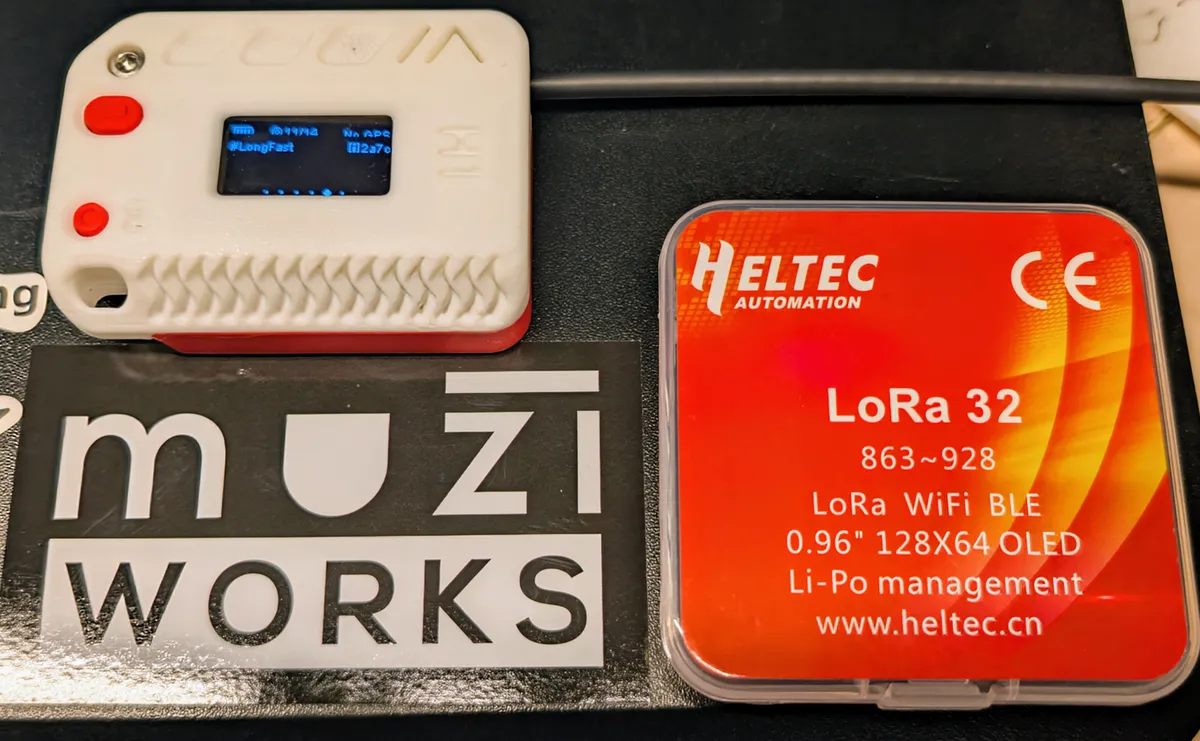
The Heltec WiFi LoRa 32 V3 pairs an ESP32-S3 with a Semtech SX1262 LoRa radio, a 0.96-inch OLED display, USB-C for power and flashing, and onboard LiPo charging. It’s not the fastest, the smallest, or the lowest-power board in our lineup. It’s the one we reach for first.
This isn’t a spec sheet review. These boards have been in the field under both Meshtastic and MeshCore firmware. Everything below comes from actual deployment, not the product page.
What’s on the Board
At the core is the ESP32-S3, Espressif’s dual-core part with built-in Wi-Fi and Bluetooth 5. It has enough headroom for modern mesh firmware and plenty of GPIO for sensors or encoders when you want to expand.
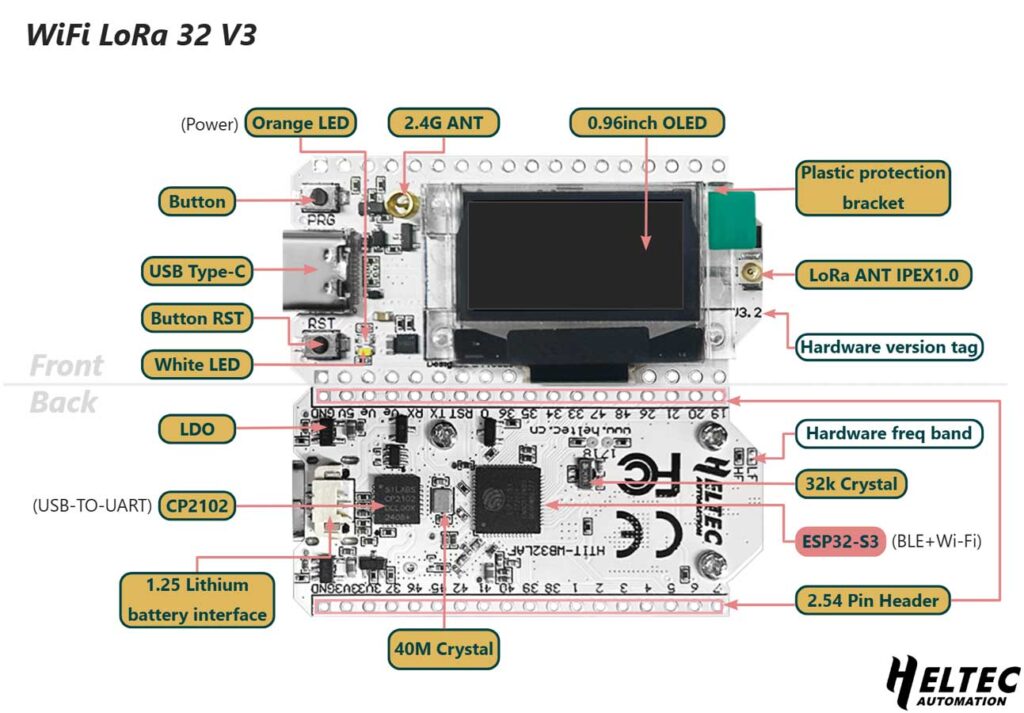
The LoRa radio is a Semtech SX1262 with a max TX power of 21 dBm (about 125 mW). No integrated power amplifier. That puts it a step behind the amplified boards like the newer V4 and the T096, which both push 28 dBm. For most use cases 21 dBm is plenty. Range on LoRa is almost always bounded by antenna and placement, not raw transmit power.
The 0.96-inch OLED is mounted on the board itself. You don’t bolt it on. It shows node status, signal info, and GPS coordinates when a GPS module is attached. For fieldwork it’s the single most useful feature on the board. You walk up to a deployed node and know immediately whether it’s alive.
Power comes in through USB-C, and the board has an onboard charging circuit for a 3.7V LiPo battery. Plug in a cell, plug in USB, and it just works. No splicing, no external charge controller for basic use.
Running Meshtastic
Flashing works first try. Bluetooth pairing is reliable. Once configured, these run for weeks without intervention. If you’re setting up your first node, the Meshtastic getting started guide covers the full process.
The OLED pays for itself during deployment. Adjusting antenna orientation, you can watch the signal numbers change in real time. Placing a relay on a hilltop, you confirm it’s talking to the network before you walk back to the truck.
Running MeshCore
MeshCore is newer than Meshtastic and still under active development, but the V3 is a solid test platform for it. The hardware has never been the limiting factor. When something doesn’t work, it’s firmware or config. That matters a lot when you’re evaluating new software, because you don’t want to debug two moving targets at once. If you’re coming in fresh, the MeshCore getting started guide is the fastest path to a working node.
Range and RF Performance
Range depends on your antenna and placement, not the board. The V3’s SX1262 does what an SX1262 is supposed to do.
When we see poor range, it’s one of three things. Bad antenna choice. Poor placement (too low, obstructed, near metal). Environmental factors. When those get handled, links are stable and repeatable. That’s the job.
Expanding the Board
The V3 doesn’t lock you in. You can start simple and add capabilities when you need them.
Physical controls. We’ve added rotary encoders to a few nodes so you can navigate the UI without pulling out a phone. The ESP32-S3 handles it without complaint.
Sensors. BME280 and BME680 environmental sensors work over I2C. Temperature, humidity, pressure, all displayable on the OLED or transmittable over the mesh.
GPS. Not built in. Easy to add over UART when you need it. Nodes that don’t need location tracking stay smaller and cheaper by skipping it.
Power Reality Check
This is not an ultra-low-power board. It’s ESP32-based. It draws more than an nRF52840 board like the RAK WisMesh 1W or the T096. That’s the tradeoff for the Wi-Fi, the extra compute, and the price point.
For fixed USB-powered installations, it doesn’t matter. For portable use, a small LiPo gets you through a day of moderate mesh traffic. For a solar repeater you only visit once a month, an nRF-based board is the better choice.
Full Specs
| Spec | Detail |
|---|---|
| MCU | ESP32-S3 |
| LoRa Chip | SX1262 |
| Max TX Power | 21 dBm (about 125 mW) |
| Wi-Fi | 802.11 b/g/n |
| Bluetooth | BLE 5 |
| Display | 0.96” OLED (onboard) |
| USB | Type-C |
| Battery | LiPo, onboard charging |
| GPS | Not included (external over UART) |
| LoRa Antenna | External, IPEX |
| Firmware | Meshtastic, MeshCore, LoRaWAN |
| Price | Typically under $20 |
How It Compares to the V4
The natural next question is whether to skip the V3 and go straight to the WiFi LoRa 32 V4. Same manufacturer, same ESP32 platform, newer generation.
| V3 | WiFi LoRa 32 V4 | |
|---|---|---|
| MCU | ESP32-S3 | ESP32-S3R2 |
| LoRa Chip | SX1262 | SX1262 with PA |
| Max TX Power | 21 dBm | 28 dBm |
| Wi-Fi | 802.11 b/g/n | 802.11 b/g/n |
| Bluetooth | BLE 5 | BLE 5, Bluetooth Mesh |
| Display | 0.96” OLED onboard | 0.96” OLED (optional) |
| GPS | External over UART | 8-pin GNSS header (module sold separately) |
| Solar Connector | No | Yes |
| Memory | Lower spec | 512KB SRAM, 2MB PSRAM, 16MB Flash |
| Price | Typically under $20 | $17.90 to $19.90 |
The V4 is the direct successor. It adds an integrated PA for 28 dBm, a solar charging connector, a GNSS header, and more memory, usually at a similar price. If you’re buying fresh today for new deployments, the V4 is the smarter starting point.
The V3 still earns its place. It’s the board we already have running on the network, parts and cases are easy to find, and every Meshtastic and MeshCore release gets tested against it. If you already own V3s, there’s no reason to swap them out. If you’re starting from zero and want the most transmit power for the money, buy V4s.
What We Tested
Deployment reliability. Every V3 we’ve flashed has booted and joined the mesh without a fight. Bluetooth pairing works on the first try.
Long-term uptime. Nodes have stayed up for weeks without a manual reset. Watchdog behavior is solid under both firmware stacks.
Firmware compatibility. Meshtastic and MeshCore both support the V3 as a first-class target. When a new release drops, V3 support is there on day one.
Heat under load. At 21 dBm the board runs warm during sustained TX, never hot to the touch. No thermal throttling issues we’ve observed.
Bluetooth range for config. Limited. Fine for configuring a node on your desk. Not something you’ll manage from across the house. Use Wi-Fi for that.
Who This Board Is For
If you’re new to LoRa mesh and want a board that won’t fight you, get a V3 (or a V4 if you’re buying brand new). It’s cheap, well supported, and forgiving.
If you need long battery life on a small cell for a remote repeater, look at an nRF-based board like the RAK WisMesh 1W or the Heltec T096. The V3’s power profile won’t get you there.
If you want built-in GPS without adding a module, the T096 has it onboard. The V3 doesn’t.
For everyone else, the V3 (or its V4 successor) does what a mesh board should do. It runs. It’s flexible. It gets out of your way.
You can find the Heltec WiFi LoRa 32 V3 on Heltec’s product page. Case in the header photo is by Muzi Works.
Comments
Related Posts
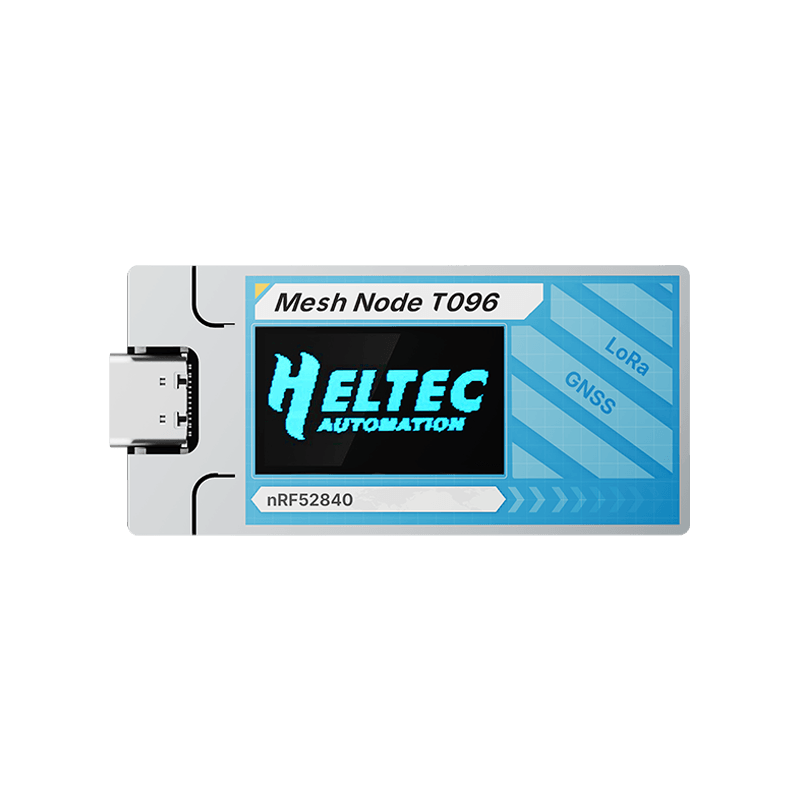
Heltec Mesh Node T096: nRF52840, Boosted LoRa, GPS for $30
The Heltec T096 pairs an nRF52840 with an amplified SX1262 pushing 28 dBm, dual-band GPS, color TFT, and solar charging. Full specs and V4 comparison.
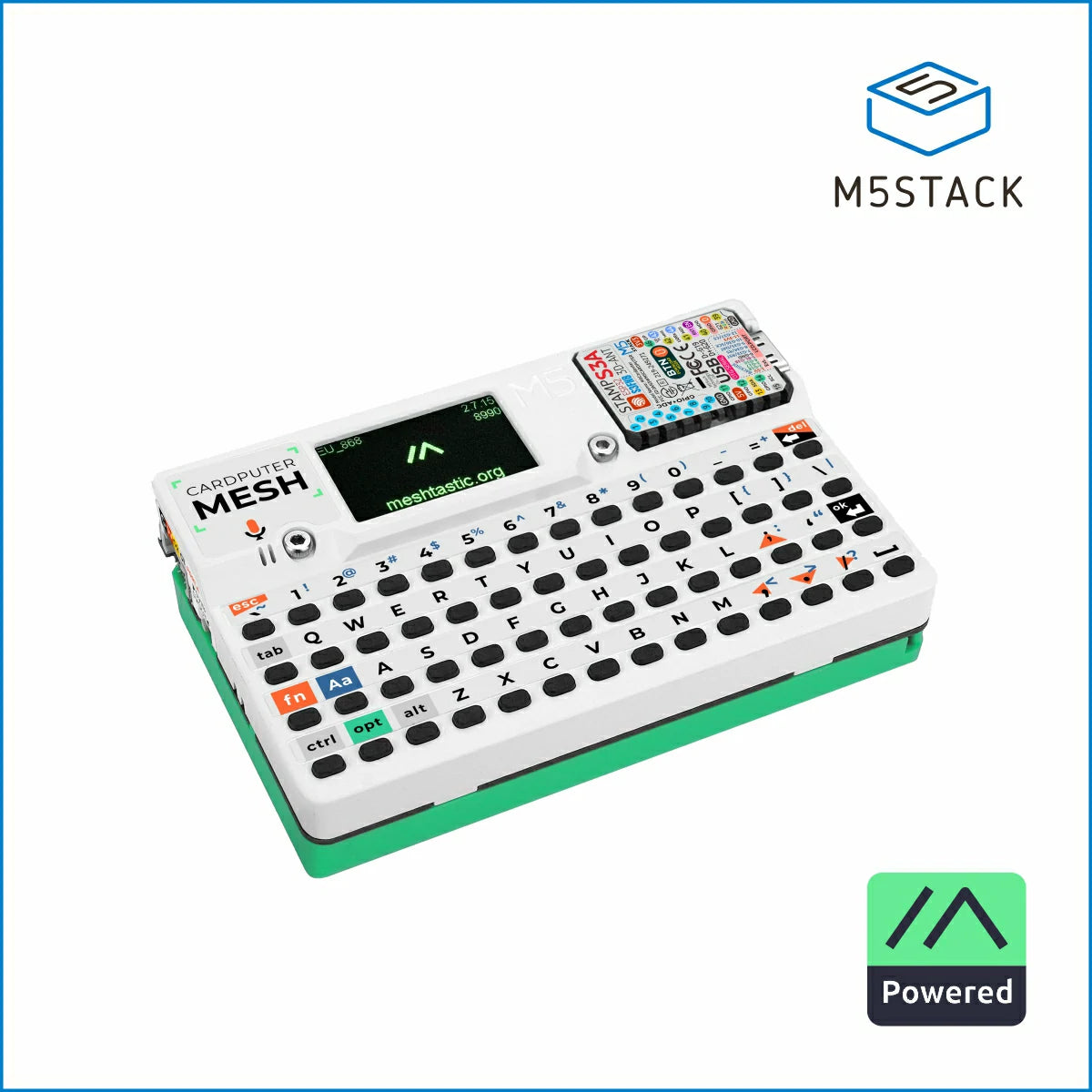
M5Stack Cardputer Mesh Kit: $48 Pocket Meshtastic Terminal
M5Stack's $48 Cardputer Mesh Kit ships pre-flashed with Meshtastic. ESP32-S3, SX1262, AT6668 GNSS, 56-key keyboard. Full specs and field notes.
GAT562 30s Mesh Solar Repeater: 1W nRF52840 for $39.99
GAT562 30s pairs an nRF52840 with a 1W LoRa stage and direct solar pads for $39.99. Specs, the no-MPPT story, and RAK WisMesh 1W comparison.